
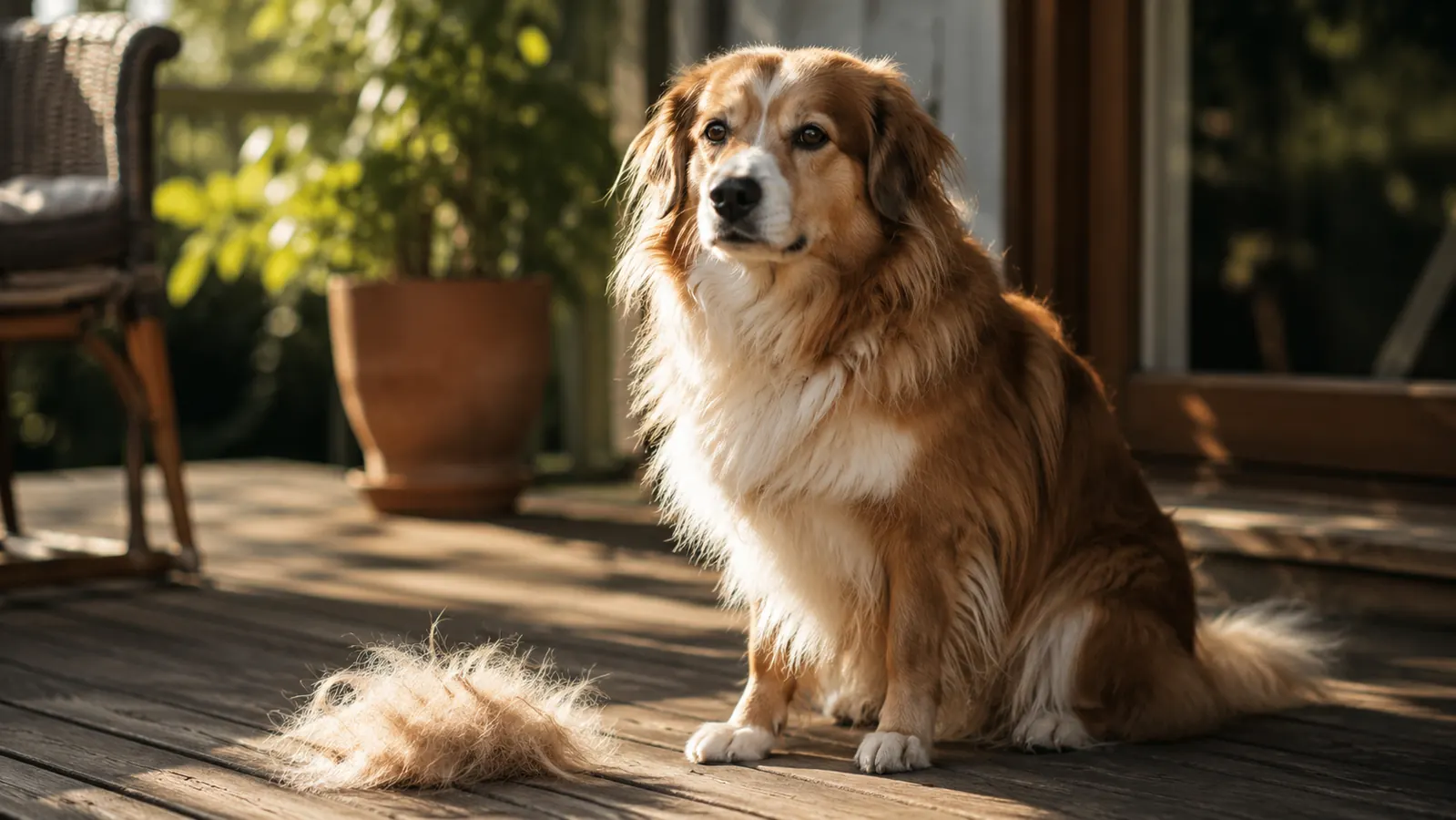
Nobody tells you it will look like you brushed a small sheep on your kitchen towel. My first pass with the FURminator pulled more loose undercoat out of our two dogs than the regular brush had collected in the whole month before. I stood there holding a clump the size of a fist and just stared at it.
That is the honest version of what this tool does, and it is also why I kept using it through a full shed cycle before writing this. We own a golden mix named Mabel, 62 pounds with a proper double coat, and a younger springer with medium hair that sheds in gusts. I am the one who brushes, vacuums, and picks fur off every sock, so I had my doubts about another gadget. Here is what actually holds up after twelve weeks of using it the way the packaging suggests and the way real life demands.
The Quick Verdict
On a true double-coated dog it removes loose undercoat faster than anything else I own, but only if you keep the pressure light and brush in the right direction. It is a maintenance tool, not a fix for every coat type, and the cleanup is real.
Amazon Check Today's Price →If you are tired of fur tumbleweeds rolling off the sofa, this is the tool that finally moves the undercoat
I still grab this before any other brush for spring shed. On the current price, it beats buying four cheap brushes that each do a third of the job.
Amazon Check Today's Price on Amazon →How I've Used It: One Full Shed Cycle, Two Very Different Coats
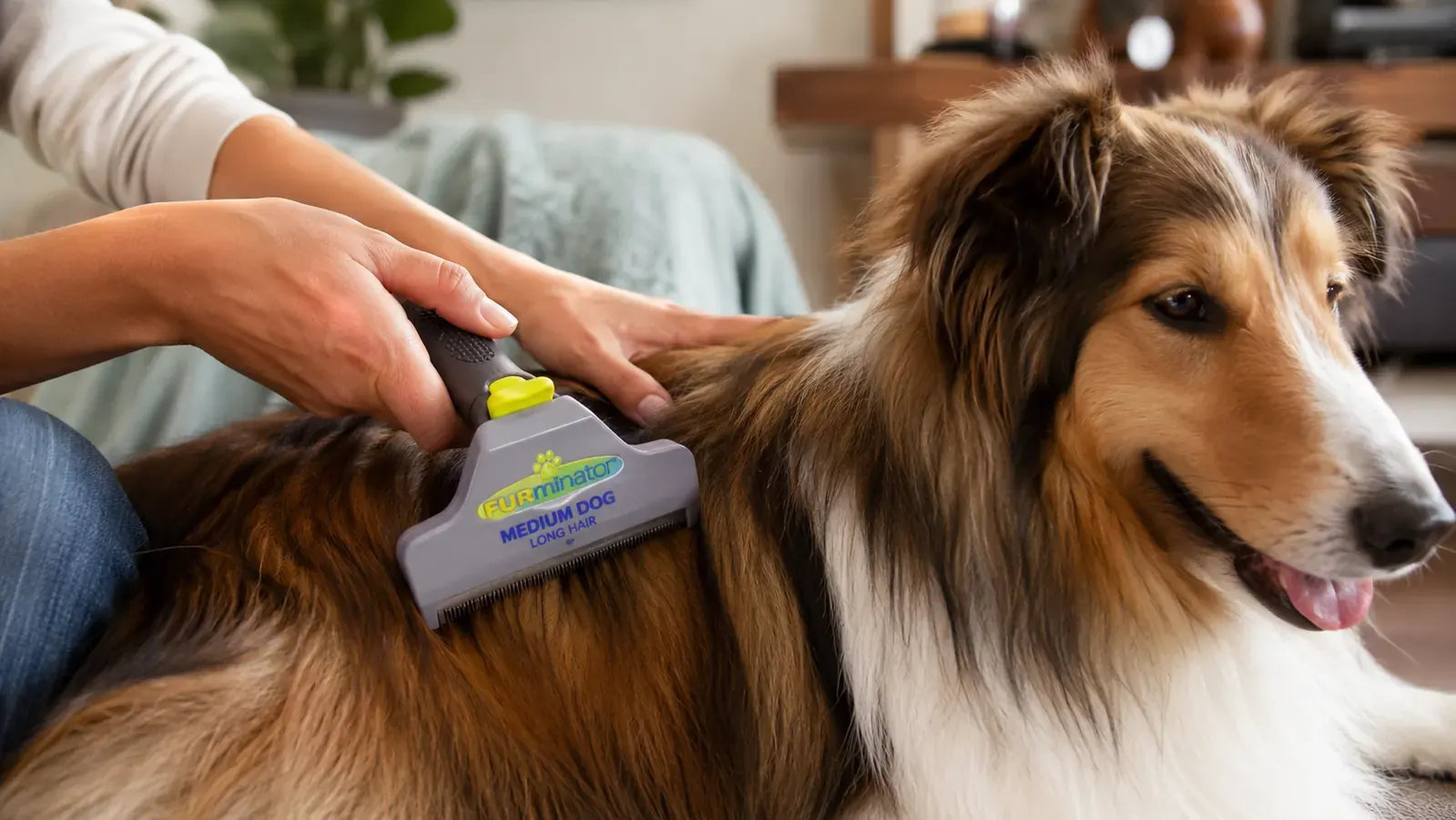
I bought the medium size for long hair, which is the version meant for Mabel's kind of double coat. I used it once a week from late winter through the worst of spring shed, roughly eleven sessions across twelve weeks. Every session ended the same way: a towel covered in pale fur, a noticeably calmer and happier looking dog, and me wondering where it all came from inside an animal that only weighs 62 pounds.
The first two sessions pulled the most, because a winter's worth of loose undercoat had packed down tight against the guard hairs. It came out in layered sheets rather than stray tufts. After that the yield settled into a steady rhythm where each brush-through came back mostly clean. That is the sign you are doing it right. If every stroke still drags out huge clumps, the dog simply had more loose coat to lose, not a sign the tool stopped working.
I learned the hard way that pressure is the whole game. Press too hard and the stainless edge drags on the skin and the dog squirms and tries to turn around. Feather-light and always in the direction the hair grows, Mabel stands still for it, and the dead undercoat releases on its own without any sawing motion. My springer, whose hair is shorter, smoother and far less dense, got maybe a quarter of the yield and did not need it anywhere near as often.
I also started writing notes in my phone after each session, which is the sort of thing I actually do with gear I treat as a hobby. Length of session, amount of fur, whether the dog fidgeted, whether the strokes were gliding or tugging. That log is what turned this from a gadget I bought into a routine I trust. It is also how I noticed the blade starting to feel blunt around week eight, which I will come back to.
What Nobody Tells You Before You Buy One
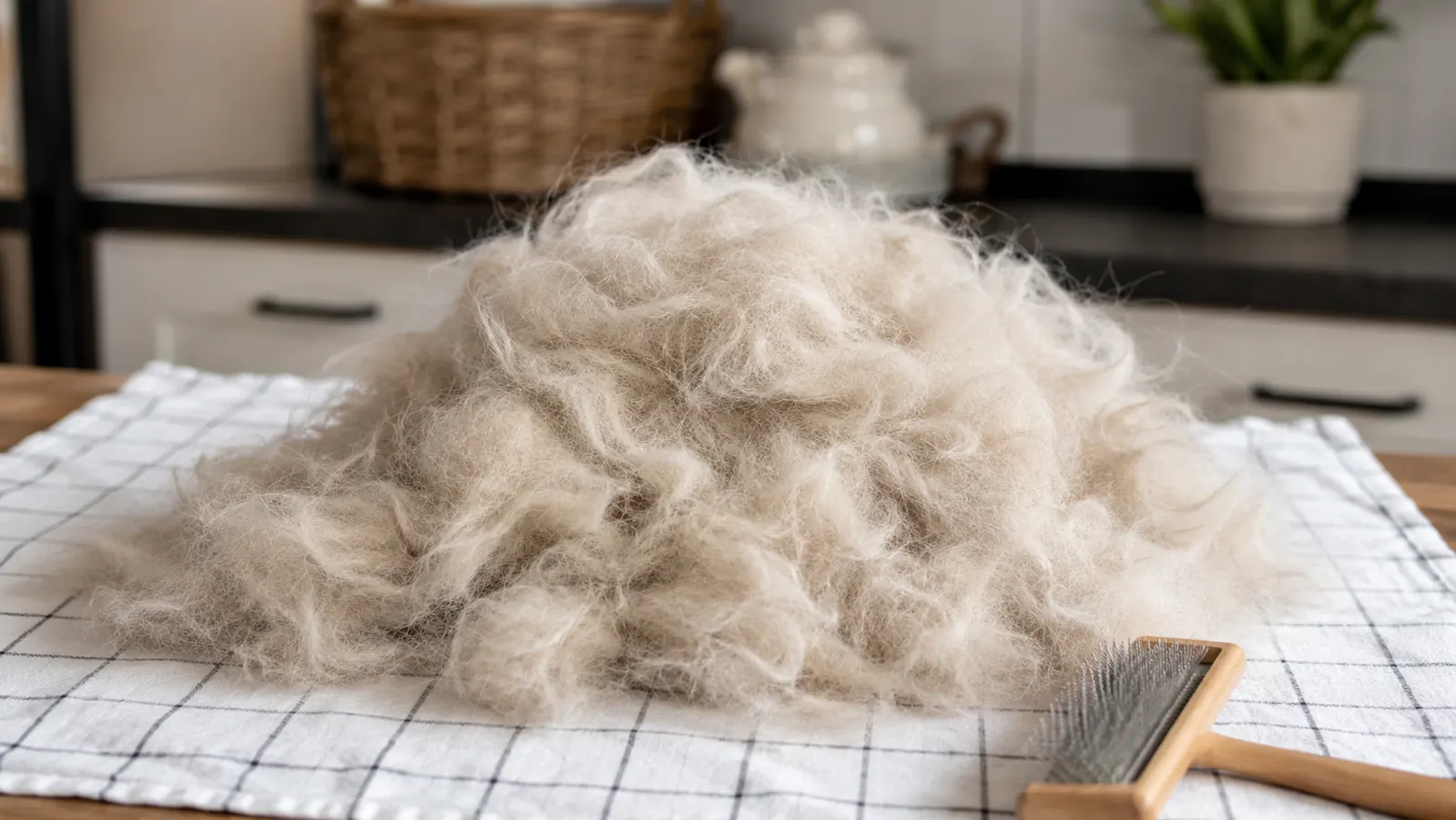
First, the cleanup is real, and it is bigger than any photo suggests. This is not a brush you use over a bare floor and pretend it all vanished. Loose undercoat comes out in sheets, and unless you brush over a towel or take the dog outside, you are coating the room in fur. I learned to set up a big kitchen towel before I start, and to hold it by the corners and carry it like a hammock to the bin when I am done, because one wrong grab sends the pile everywhere.
Second, the blade dulls in a way cheap brushes never do, because it actually engages the coat several thousand times a session. Around week eight I caught my first tug where there had been a glide, and Mabel turned her head. FURminator sells a small sharpening tool for the stainless edge, and I did not believe it mattered until that moment. A few careful passes brought the glide straight back. Budget for that sharpener or accept that the tool will feel distinctly blunter by the second month.
Third, and this is the honest note I most want to flag, it is very easy to over-brush. Because it removes so much so quickly, you can keep going until you are pulling healthy guard hairs and visibly thinning the coat. On a double-coated dog you can even brush toward skin irritation if you chase every last tuft out of anxiety that you are missing some. When the strokes come back nearly empty, stop. That is the correct amount of effort. The tool does not need to bring back nothing, it needs to bring back the loose layer and nothing else.
When the brush comes back nearly empty, that is the whole session. Keep going past that and you are thinning a good coat, not cleaning a dog.
The Technique That Actually Makes It Work
Every owner who hates this tool either presses too hard, brushes against the grain, works on a matted coat first, or expects it to handle a coat it was never meant for. The technique is not complicated, but it is specific, and the packaging only gestures at it.
Start with a coat that is free of mats and tangles. This tool lifts loose undercoat, it does not untangle knots, and dragging the stainless edge across a tangle hurts the dog and blunts the edge faster than anything. If your dog mats, brush the tangles loose with a slicker or comb first and only run the FURminator over clean, smooth coat.
Then work in sections, in the direction of hair growth, with light pressure and long, smooth strokes. Let the blade do the lifting. If the dog leans away or pulls free, you are pressing too hard. Stop every few strokes to flick the collected fur out of the blade, or it packs solid and stops engaging the coat, which makes you press harder to compensate. That is the spiral that turns a gentle session into an unhappy dog.
Finally, time it. On a heavy shedder a ten minute session weekly through the shed season outproduces an exhausting hour once a month. The loose undercoat builds up faster than that, so weekly is what keeps the fur off the furniture. My living room demanded far less vacuuming from week three on because I stopped letting the coat accumulate.
Working With The Shed Calendar
Dogs with real undercoats do not shed steadily all year, they mostly blow their coat twice, in spring and fall, and the trigger is daylight length more than temperature. Our worst stretch hit from mid-April to early June. Knowing that changed how I scheduled, because I stopped treating the fur as a constant battle and started treating it as a two season job with a clear peak.
During the peak I brushed weekly and sometimes twice in a rough week. Off-season I dropped to every other week, and the single sessions came back light. A dog kept on a steady undercoat removal schedule sheds less in one dramatic dump, which is exactly what you want if your goal is less fur on the couch rather than an impressive pile on the towel. The calendar made the weekly habit easier to stick to, because it gave me permission to back off when there was nothing to remove.
Dry Coat Only, And A Word About Bathing
The one timing detail nobody told me is that this tool is built for a dry coat. If you brush right after a bath, the hairs are slick and the stainless edge skids across the surface instead of lifting the undercoat, which makes you instinctively press harder and gets you exactly the wrong result. Dry is always right with this tool.
So the order that worked for us every time: dry the coat fully from the bath first, or skip the bath and brush clean dry coat, then run the FURminator. Brushing before a bath is also a good move, because a coat already freed of its loose underlayer washes cleaner and rinses faster. Owners who bought one expecting to use it wet because it seemed gentler are working against the tool, and that is a disservice to what it is actually good at.
On A Double Coat, It Wins. On Anything Else, Maybe Not
The FURminator earns its keep on dogs with a real undercoat: the golden types, the labs, the shepherds, the collies, the huskies. That loose, wooly layer is exactly what the tool is built to lift, and it does so faster and with less effort than any slicker or rake I own. On Mabel, one ten minute session cut my vacuuming of the living room in half for the next three days. That is not a small thing in a house where fur is the running joke.
But the honest side of the verdict is that it is not the tool for every coat. On single-coated and short-haired dogs, and on curly or wire coats, the undercoat barely exists, so the tool mostly slides and does nothing except maybe catch an occasional loose guard hair. On curly coats it can pull and skip rather than glide. My springer needed it lightly and rarely. A neighbor's poodle mix gets nothing from it at all. That is not a flaw in the tool, it is a mismatch of tool to coat.
This is the most common source of the bad reviews, and I want to be fair about it. People buy this, use it on a dog with no undercoat or with a coat full of mats, and conclude it is a sharp gimmick. If your dog does not blow a winter coat, this is the wrong purchase no matter how many five star reviews you read. The reviews that rate it one star are usually about the wrong dog wearing the wrong tool, not about the tool failing at its one real job.
What I Liked
- Removes loose undercoat faster than any brush I own
- Visible results from the very first session, which is satisfying
- Comes in a size and length matched to coat type
- Solid construction with a comfortable grip, held up through a full shed cycle
- Weekly use cuts fur on furniture and cuts vacuuming time noticeably
- Routine is a genuine ten minute job once you get the technique
Where It Falls Short
- Only shines on double-coated dogs, not every coat type
- Real cleanup needed, it pulls fur out in sheets
- Stainless edge dulls over time and needs the separate sharpener
- Easy to over-brush and thin a good coat if you chase every tuft
- No help at all on single, curly or wire coats
- Not a cheap brush, and not worth it if your dog has no undercoat
How It Compares To What Else I Owned
Before this I had a standard slicker brush and a wide-toothed comb, and both have their jobs. The slicker removes debris and tangles the topcoat nicely, and the comb parts the fur so you can see the skin. Neither one pulls the dead undercoat out in volume the way the FURminator does, because they are not designed to engage that layer specifically.
In my log, a fifteen minute slicker session on Mabel at the start of shed produced maybe a teacup of fur and left her coat looking brushed but with the loose underlayer still underneath. The FURminator did more in half the time and got down to the layer that actually sheds. The slicker still has a place in my routine for the topcoat, but it is no longer the tool I reach for first in shed season.
I would not tell you to throw your slicker away, because that would be dishonest about how a complete grooming drawer works. What I would tell you is that if your dog has a real undercoat and you have been fighting the shed with a slicker alone, you have been fighting it with the wrong tool, and this is the upgrade that actually moves the loose layer.
Who This Is For
This is for the owner of a double-coated or heavy-shedding dog who is tired of living in fur. If you have a lab, golden, shepherd, collie, husky, border collie, or any mix that blows a winter coat, and you are willing to spend a few minutes a week brushing in the right direction with light pressure over a towel, this tool will measurably cut the fur pile. It pays for itself in the first spring shed alone, and it turns a frustrating hour of fur chasing into a calm ten minute routine.
It suits the owner who will actually keep a weekly schedule and set up properly before starting, because that is what separates a clean, effective session from a mess. If that describes you, and your dog's coat matches the tool, this will be one of the few grooming purchases you buy once and use for years.
Who Should Skip It
Skip it if your dog has no real undercoat, or has a single, curly, or wire coat, because it will do little and may pull or irritate. Skip it if you will not keep up the weekly routine, because brushing once a month barely moves the shed and leaves you disappointed. And skip it if you wanted a tool that leaves no mess, because the cleanup is part of the deal no matter how carefully you set up.
It is also not the tool if you are starting from a badly matted coat, because you need to handle the tangles first. Buy a slicker or comb for that job, get the coat clean, and only then consider whether the undercoat is worth this tool. Match the tool to the coat and the routine, and you get the five star experience. Mismatch either one and you get a drawer ornament you reach for twice a year and then set aside.
One tool that finally earned its place in the grooming drawer, for the right dog
If your dog blows a coat, start here. The current price is worth a shred less fur on every surface you own.
Amazon Check Today's Price on Amazon →