
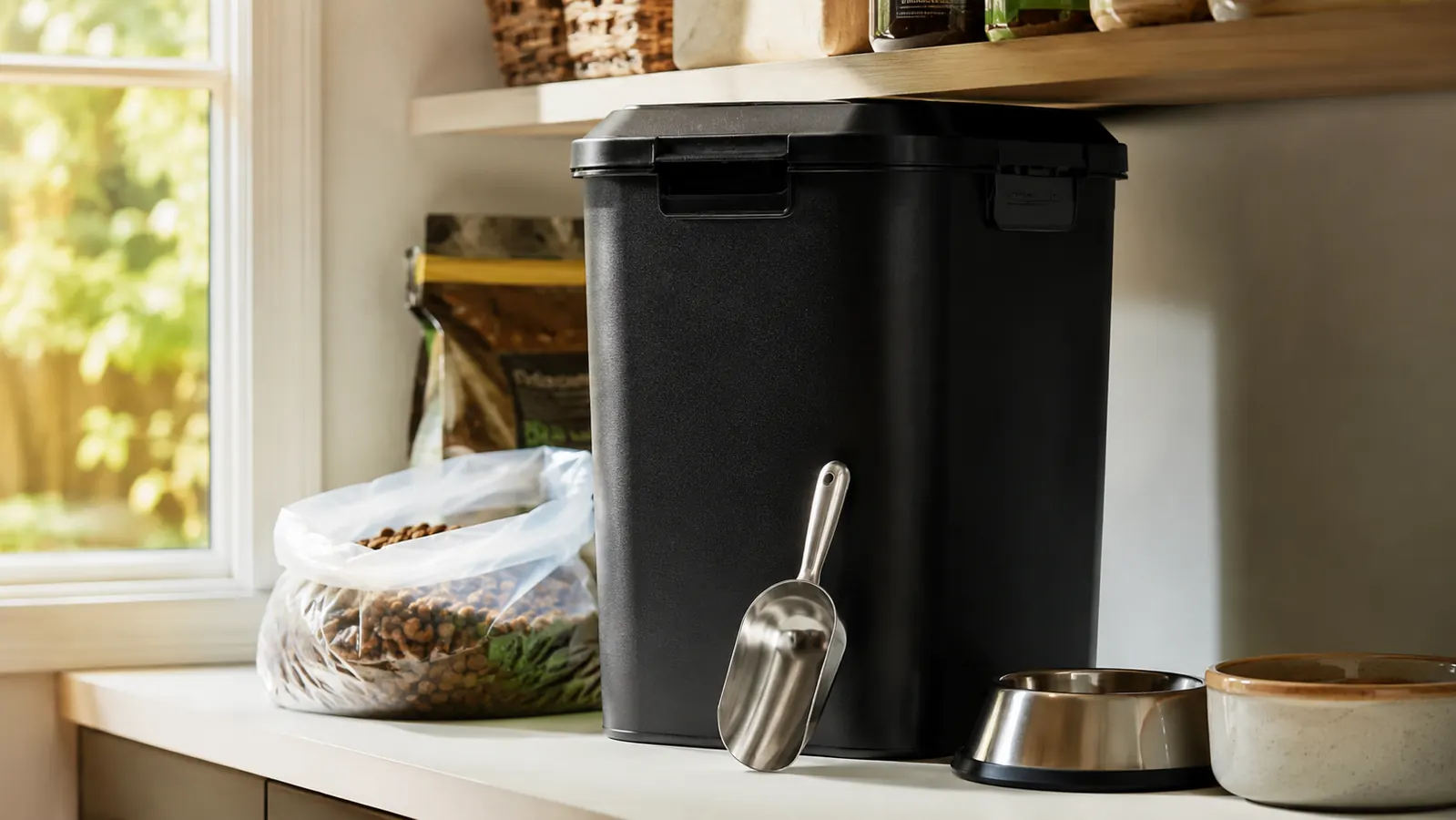
I finally bought a dog food bin because the pantry moths moved in. Not the cute fruit-fly kind. I found them in the seam of a forty pound bag of kibble, and they had already gotten into a second bag before I smelled the musty crumble. I dumped two expensive bags, scrubbed the shelf, and swore I would never keep dry dog food in a paper bag again. That is the problem that pushed me to the IRIS USA 38 pound container, black, the one everyone on Amazon seems to own.
A year later I still have it, and I still like it. This is the honest long haul review, the kind where I tell you what the five star listing photos are careful not to show you. Because it is a good bin, but the word airtight is doing a lot of work, and a few of the details only surface after you have lived with one for a while.
The Quick Verdict
A tough, easy to clean, genuinely moisture and pest resistant bin for the money, as long as you treat the lid as good and snug rather than vacuum sealed.
Amazon Check Today's Price →Stop the pantry moths before they find your next bag
The step that ended my kibble losses was moving every open bag into a sealed bin. The IRIS USA 38 lb container is the one that held up for a year in my pantry. Check the current price and see it for yourself.
Amazon Check Today's Price on Amazon →How I've Used It
My household is two dogs and one cat, and both dogs are Labs, so we go through dry food fast. At the busiest stretch, with a one year old who eats like a furnace and a nine year old who is picky, the 38 pound bin gets refilled every couple of weeks. It has sat on the pantry floor, been dragged to the kitchen for feeding time, been wiped down after spills, and been left in the garage during a deep clean of the house.
In that year it has had kibble in it constantly, been washed twice by hand, carried up and down a short set of steps, and knocked over exactly once when a dog shoved past it to reach a dropped treat. It survived the knock with nothing but a scuff. I cannot say that about the flimsy latching bin I tried years ago, which split a hinge the first month.
The way I use it matters for the verdict. I keep the box on the floor, pour a big open bag in, and scoop two or three servings a day. The bin, the lid, and the included measuring scoop are the whole setup. There is no locking mechanism, no pump seal, no gasket to replace over time, which is exactly why it has held up. Fewer moving parts means fewer ways to break.
The Lid, Which Is The Part Everyone Misreads
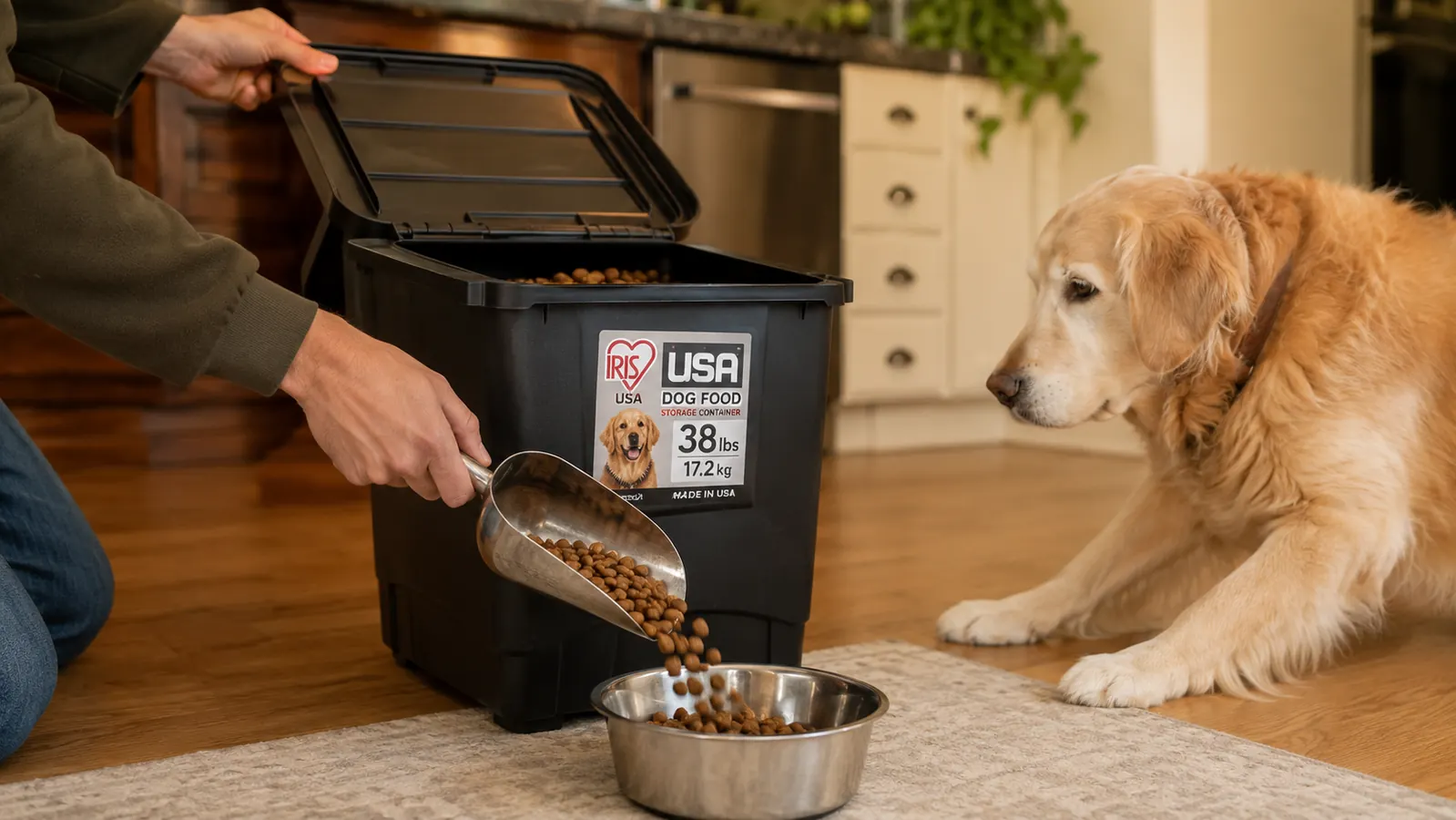
Here is what the marketing does not say. The lid is not a screw top and it is not pressure sealed. It is a rigid plastic lid with a rubber gasket around the inside edge that snaps down over a short lip. There are no latches on the standard model. The seal comes from that gasket pressing against the rim, and it works, but the word airtight has a ceiling.
If you press down in the middle of the lid you can sometimes feel it bow slightly and seat a fraction better. The gasket keeps smells in and moisture out to a level that defeated my pantry moths completely. I found zero live moths in the bin in a year, and the kibble stayed crisp. But I would not trust it to keep kibble fresh for many months in a humid garage in a southern summer. It is good, honest storage for a household that refills every couple of weeks, not a long term emergency bucket.
One predictable complaint I saw in the reviews is that the lid does not lock, so a determined or clever dog can pop it. My dogs are food motivated but not lid engineers, so this was never a problem for me. If you have a dog that has figured out latches, this is not the bin for you, and I would point you to a screw lid model instead.
The moment that sold me was opening the bin after three weeks and getting no stale whiff at all. My pantry moths never came back, and the kibble stayed crisp to the bottom of the bin.
What It's Actually Made Of And How It Cleans
It is a thick, fairly rigid plastic, advertised as BPA free and made in the USA. The walls are smooth with a subtle texture that I expected to trap grime. It does not. The smooth inside wipes clean easily, and the whole thing rinses with warm soapy water. I was genuinely surprised how stain resistant it is, because I have had plastic bins that took on a permanent grease film no matter how I scrubbed.
There are four small wheels on the bottom, one per corner. They are not great wheels. On smooth kitchen flooring the bin is easy to roll a few feet to feeding time. On carpet or across a threshold they catch and tilt, and you end up lifting the whole thing, which is heavy when full of 38 pounds of kibble plus the bin itself. Round the forty five pound mark when full. Plan to lift, not glide, if your floor is not smooth.
The included scoop is a plain plastic cup with a short handle and no built in measuring marks, just fill it to the brim. For me it holds roughly two cups, close enough that I mentally treat it as one serving for my smaller dog. It lives clipped on the outside of the bin, which sounds convenient and mostly is, until a dog bumps it and the clip lets go. I have found that scoop on the floor more than once.
Why The Bag Belongs In The Bin And Not The Shelf
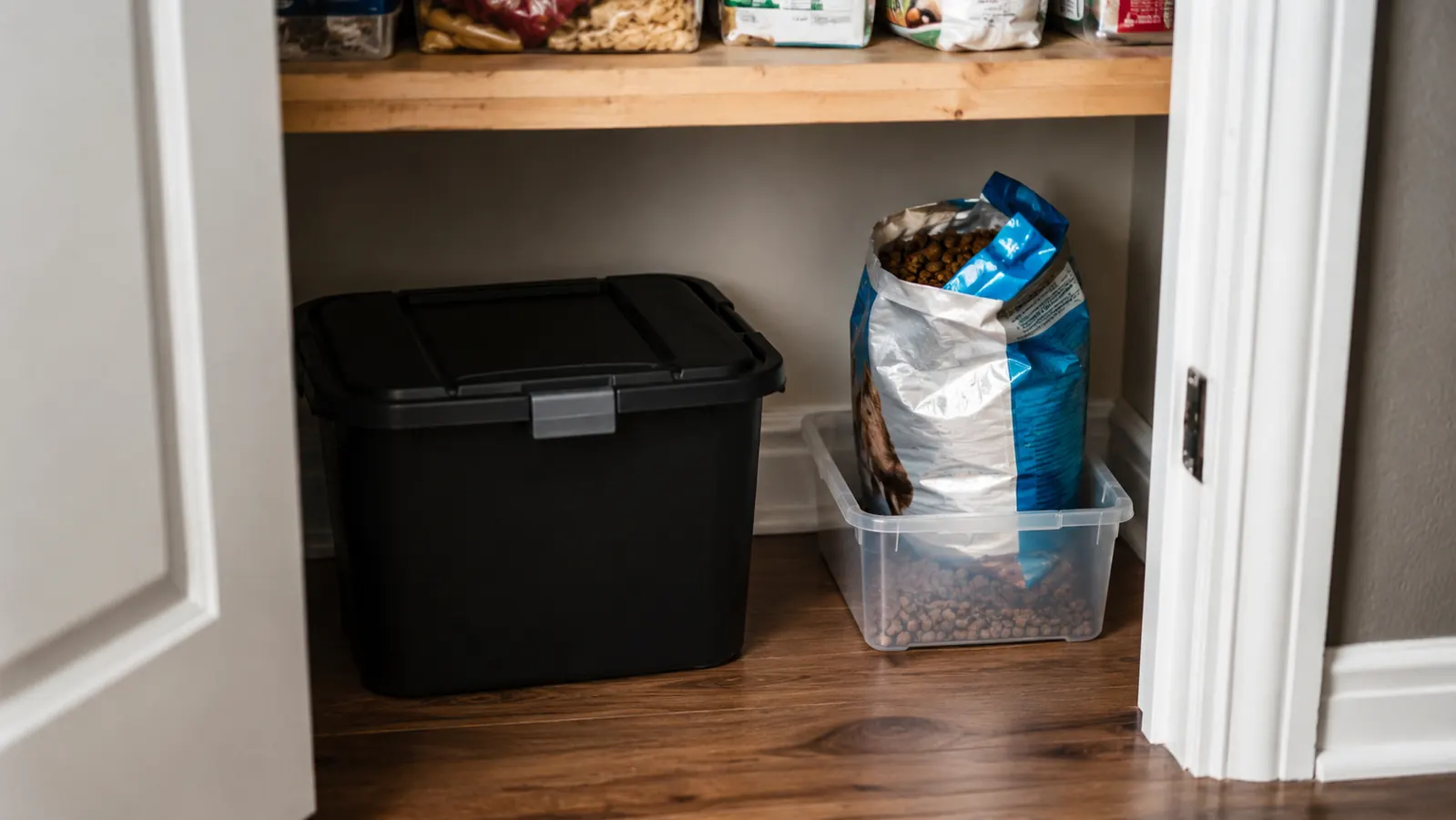
For a long time I was on the side of the argue that keeping kibble in its original bag is fine, because the bag has the nutrition info and the manufacturer's seal. Then I lived through the pantry moth year and changed my mind. The problem is that an opened bag is never sealed again. The rolled top is not airtight no matter how many clips you put on it, and it is exactly the gap that tiny pantry pests find their way through.
There is also the moisture question. Dry kibble is coated in fat, and fat goes rancid over time when exposed to air. An airtight bin genuinely slows that down. I noticed the difference in one particular way: the bottom third of a bag used to taste stale to my picky dog, and he would start leaving it. Once his food went in the bin, he stopped leaving the bottom of the bowl. That is not a testimonial I expected to write, but it is the honest result.
Nutrition labels matter too. I keep the printed label cut from the bag taped to the inside of the pantry door, and the bin holds the food. That way I have the protein, the calories per cup, the bag date, and the manufacturer's info without a bulky bag rolling around the floor. It is a small quality of life change that makes the bin earn its shelf space.
The Little Details That Only Show Up With Time
A few things took weeks to notice, and I figure they are worth putting down because nobody mentions them. The lid is flat and fairly large, which means it collects dust, fur, and the occasional stray treat that someone drops on top. It also makes a fine mini shelf for a cookie jar or a stack of napkins, which sounds silly until you realize you have started doing it. The matte black finish hides smudges well, which I appreciate more than I expected.
The height matters more than the photos suggest. This is a tall, narrow bin rather than a wide shallow one, which makes it fit under most pantry shelves and inside the bottom of most cabinets. The tradeoff is that when the kibble level gets low, you lean down to scoop from a bin that has dropped to an awkward height near the floor. It is not a dealbreaker, but if you have a bad back, a wide shallow screw lid bin is easier on you because you do not reach down as far.
One more honest note on the wheels and the full weight together. The bin rolls fine when it is half empty. When it is full of forty pounds, you do not roll it, you skid or lift it. The little wheels are mostly there to let you nudge it around the pantry floor, and they do that well enough. Just do not expect to glide a full bin across the kitchen single handed while holding a coffee mug in the other hand. I tried, and the bin won that argument.
How It Compares To The Other Bins I Tried
Before this I had a cheap latching storage tub, the kind meant for garage shelves, and it failed on every axis. The lid cracked, the seal was cosmetic, and pantry moths did not even have to work to get in. I also briefly tried a wide, flat-bottomed plastic bin with a screw lid from a different brand, and while the screw lid sealed better, the threads were a pain to line up one handed with a dog waiting at my feet.
The IRIS USA sits between those two. Its snap down gasket lid is easier to open and close one handed than a screw lid, and it seals far better than the latching tub ever did. It is also the cheapest of the three that actually sealed, which is the whole reason it has stayed in my pantry. If you want the details of how it stacks up against the Vittles Vault, which is the other big name people pit against it, I have a full head to head comparison that breaks down the seal and the price differences honestly.
The honest bottom line on the comparison is this. For a household that refills every two weeks, the IRIS USA wins on value and ease of everyday use. For someone who wants a bombproof seal for months of storage, a screw lid bin is the safer bet and worth the extra money and the fiddlier lid. Know which one you are before you buy, and you will not be disappointed either way.
What I Liked
- Genuinely keeps kibble crisp and kept pantry moths out for a full year
- Thick, rigid plastic that is easy to wipe clean and did not stain
- One hand lid that snaps down over a real rubber gasket
- Made in the USA and BPA free, with a scoop included
- A bright and cheap option compared to screw lid bins the same size
Where It Falls Short
- The lid is not latched and not vacuum sealed, so a clever dog could pop it
- The four small wheels are useless on carpet and catch on thresholds
- Feels heavy and awkward to lift when holding a full 38 lb load
- The included scoop clip lets go and the scoop ends up on the floor
- Not built for months of long term storage in a humid garage
Who This Is For
This bin is for a household that buys dry food in bulk, goes through it within a few weeks, and wants a simple, tough container that keeps the food crisp and keeps pests out. That describes most families with a medium to large dog, or a multi pet home like mine that moves a lot of kibble. It is also a genuinely good pick if you are tired of the pantry moth or weevil cycle and want to break it the cheap way.
If most of what you want is a container that seals well, survives daily use, stays clean easily, and does not cost much, this is the one I would buy again. The 38 pound size matched the forty pound bags I buy, with just enough room to tip the whole open bag in without a funnel and without spilling. If you feed a small dog or a single cat and only buy a small bag, the same bin exists in a smaller size, and that is probably the better fit for you.
Who Should Skip It
Skip it if you have a dog that has learned to open latched containers, because this lid has no latch and will not stop a determined animal. Skip it if you need truly long term storage in a humid garage, where a screw lid bin will seal tighter and hold up better. And skip it if you want something that rolls smoothly; on carpet this bin is a lift, not a glide.
It is also not the right pick if you prefer to keep everything on a deep shelf, because a full 38 pound bin is heavy and there is no molded handle. I keep mine on the floor for that reason. And if you hate re-sealing and would rather throw the whole bag away when it goes stale, no bin fixes that. The bin only helps if you actually move the food into it and keep it closed. If you are not willing to do the small retraining of your own habits, save your money.
The one purchase that ended my pantry pest streak
A year later my kibble stays crisp, my pantry is clean, and I have not thrown out a single bag since. If you are still storing dog food in an opened bag, this is the fix that worked for me. Check the current price on Amazon.
Amazon Check Today's Price on Amazon →