
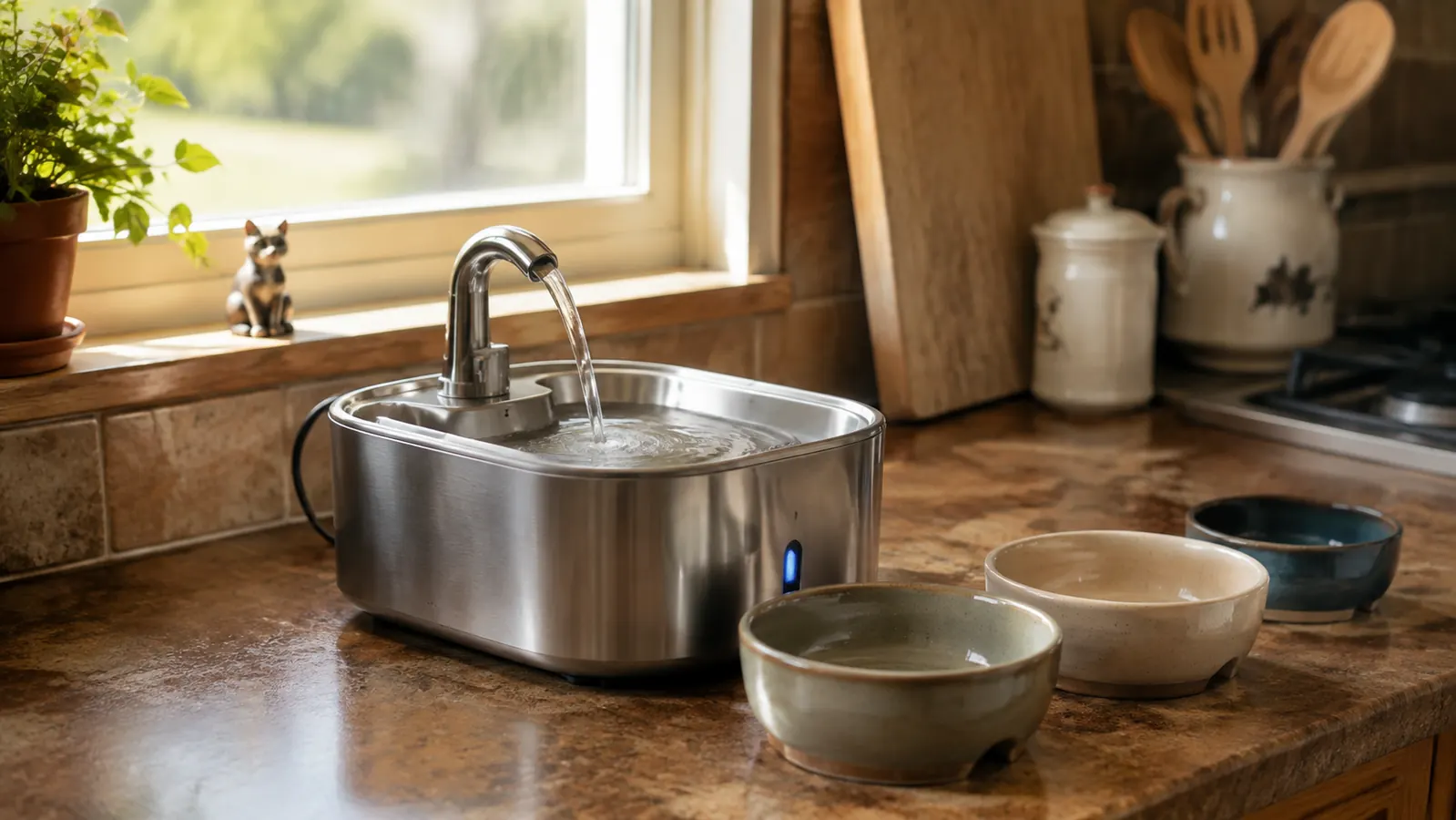
Every review I read before buying the GIOTOHUN stainless steel fountain told me the same two things. Your cat will drink more, and the moving water stays fresher than a standing bowl. Both turned out to be true. What nobody told me is the part that actually decides whether you keep using one of these after the first month: the cleaning. So six months in, with three cats and a full routine behind me, this is the honest review I wished I had found, the one about the refill, the pump, the filter, and whether the whole thing earns its spot on the counter.
My house runs on feline opinion. Daisy is the 11 year old, and she drinks from anything that moves, a dripping tap, a puddle on the porch, her own paw. The two brothers, Max and Leo, are two, and they ignored every still bowl I ever set down. They would sniff it, stare at it, and wander off to find the shower floor. That is the whole reason a fountain came into the house at all. I had read enough about how cats prefer running water, and I had the vet's gentle nudge about kidney health in it for the long haul, so I finally gave one a try rather than spending another month filling bowls that did not get touched.
The Quick Verdict
The GIOTOHUN stainless steel fountain got both picky brothers drinking reliably, and the steel is easier to keep clean than plastic. But it is not set and forget. It asks for a five minute wash every few days or the stream slows and the bowl gets slimy. Buy it for the drinking, go in knowing it is a small chore, not an appliance.
Amazon Check Today's Price →If your cat ignores standing water, this is the fix that worked here
After six months the two cats that would not touch a bowl now drink from the fountain every day. It takes real cleaning to keep it that way, and it is worth it for the drinking alone. Check today's price on Amazon and see if the stainless steel GIOTOHUN fits your counter.
Amazon Check Today's Price on Amazon →How I've Used It
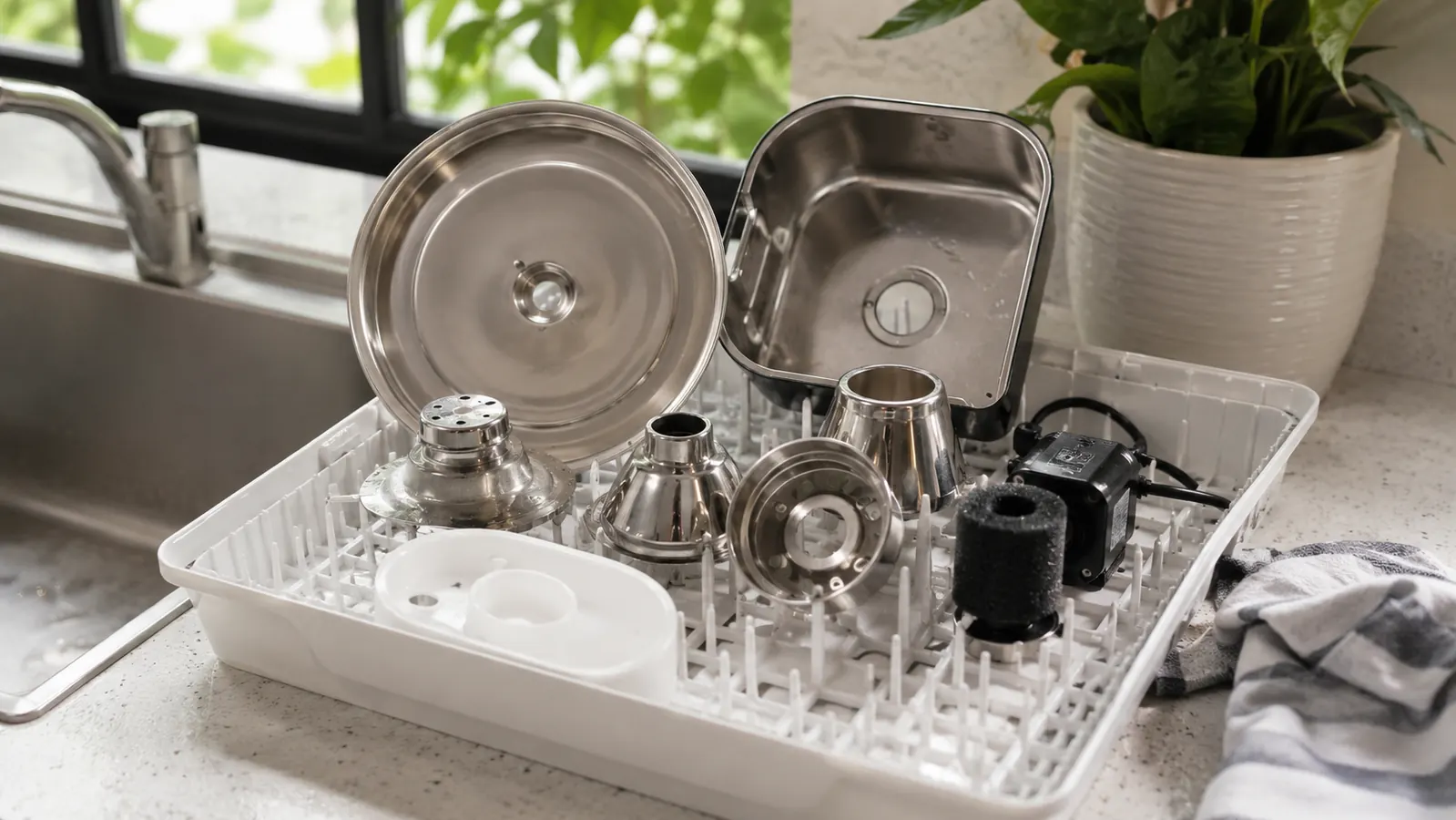
I ordered the GIOTOHUN 74 ounce stainless steel fountain back in February, which is the two liter size, and set it up on the kitchen counter away from the food bowls. That last part mattered more than you might think. I tried it first near the food bowls and the cats treated the space as a dining room, not a watering hole. Moving it across the counter to the far corner, out from under the feeding area, is what finally made it read as a source of water in its own right. The instructions are plain and the whole thing comes apart into a steel bowl, a pump, a sponge filter, and the little floating leaf that breaks the surface water.
Assembly took me about five minutes, and the cats did not need the sales pitch. Max walked over, heard the stream, and put his head in it within an hour. Leo took two days, but that is Leo, cautious about everything. The first night I noticed the water level drop in a way it never had before, and that little detail, seeing the water actually going down, is the first real proof that a fountain earns its keep. Daisy, true to form, claimed it as hers and drinks from it with the confidence of a cat who has been waiting years for someone to finally install a tap she approves of.
Running it has been simple. It is a quiet pump and the stream is gentle, more a soft trickle than a spout, which matters because nervous cats will not drink from something that splashes their face. The two liter bowl lasts my three cats about two days between top ups. That sounds like a small thing, but in a busy house it means I am not filling bowls twice a day anymore, and it means the water they do get is being cycled and filtered rather than sitting and going flat.
The honest part comes next. This is where most reviews stop, and it is the part I want to be straight about, because a fountain that you dread cleaning is a fountain that stops getting cleaned, and then it is doing more harm than a bowl. A neglected fountain is a breeding ground for the very bacteria a clean bowl would not have, so the material and the routine are not the boring footnote, they are the whole story.
The Part Every Review Skips: The Cleaning
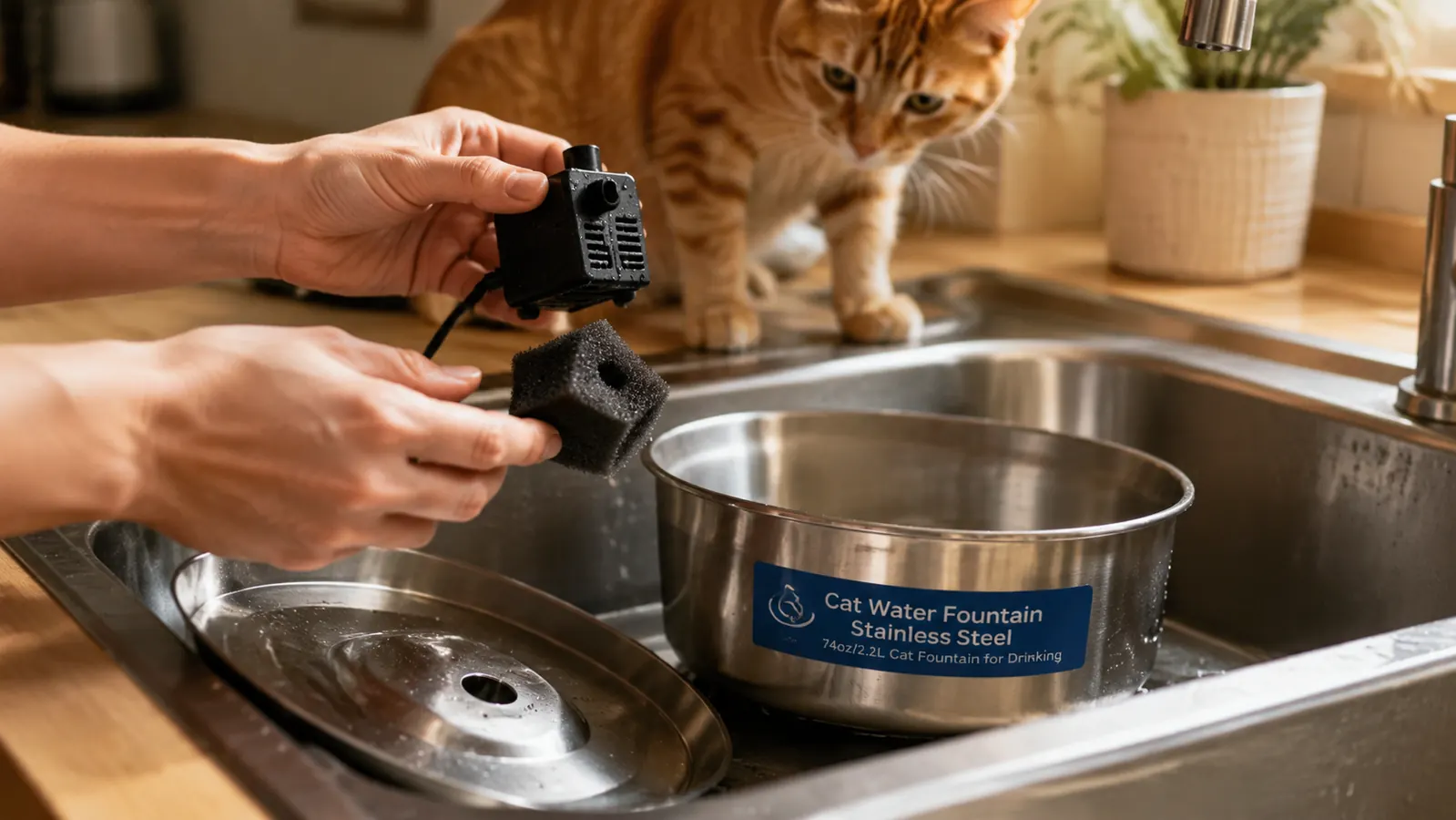
Standing water announces itself slowly. A fountain hides how dirty it is until the day you pull the pump out and feel the slick. The buildup is the reason so many fountains end up in a cupboard after six weeks, and I understood exactly why the moment I saw my own. My routine settled into every few days, not every day, and that is the single biggest difference between a fountain that stays nice and one that turns into a science experiment. On wash day I unplug the pump, lift the bowl, and take out the sponge filter. The bowl and the pump housing wash under the sink with warm water and a drop of dish soap, and I use a soft scrub brush on the pump interior, where the slime likes to hide in the seams of the impeller chamber.
I keep a small dedicated scrub brush for this in the drawer under the sink, the kind you would use on a baby bottle. That is the trick, honestly. The pump is a small plastic housing with a blade inside, and if you do not get in there with a brush, you are only rinsing the outside. I run water through the impeller chamber from both ends, give the little blades a gentle scrub, and rinse again. On a fountain with a sealed or fussy pump you cannot do this, and that is a real reason to favor a design that actually comes apart.
The floating leaf is the part to watch. It spins on the surface to break the water tension, and hair and dust collect on it faster than anything else. I wipe it on every wash and it stays clean. In the whole six months I have never had to soak the pump overnight, because I have never let it get that far. The price of that is the every few days wash, and if you skip it, the inlet clogs, the stream weakens, and the motor gets warmer than it should. Warm is the warning sign. A fountain motor that runs hot is a motor that is working too hard against a clogged inlet.
The fountain did not end the cleaning. It just moved it from a twice a day bowl rinse to a proper every few days wash, and I would rather do one real wash than twelve quick ones.
I am not going to pretend this is a five minute job and I actually stick to it. On a relaxed day it is closer to ten, because I take the pump apart properly and dry the pieces before they go back. Drying matters more than you think. If I put a damp pump back in a damp bowl, the next water goes cloudy faster, so I let everything air out on the dish rack for a bit. But here is what I will tell you plainly: unless you are willing to do that wash every few days, a fountain is not for you. A neglected fountain is worse than a clean bowl, and that is the honest truth nobody puts on the box.
What I Liked
- Stainless steel bowl is easy to wipe, rinse, and keep free of the cloudy film plastic attracts
- Gentle, quiet stream that nervous cats actually drink from, both picky brothers now drink daily
- Simple five piece design with a pump that actually comes apart for a proper clean
- Quiet enough to run in the kitchen without notice
- Pump and filter are cheap and easy to find replacements for
- Larger 74 ounce capacity means less frequent top ups than a small bowl
Where It Falls Short
- Needs a real wash every few days or the stream slows and slime builds up
- Sponge filter needs regular replacement, an ongoing small cost
- Pump inlet clogs if you skip washes, so the routine is non-negotiable
- Two liter capacity still means topping up every couple of days in a multi cat house
- The floating leaf collects hair and needs wiping on every wash
- You learn to dry the pump properly or the next fill goes cloudy
What The Stainless Steel Actually Buys You
The material is the reason I picked this one over cheaper plastic fountains, and six months in it was the right call. Plastic fountains are notorious for the cloudy film that builds up inside, a mix of minerals, food residue, and cat slime that is a pain to scrub out of seams. Stainless steel does not do that. The bowl rinses clean with almost no effort, and that is the whole ballgame when you are washing it every few days. It does not hold onto the same smells, and a quick wipe with soapy water leaves it looking like the day it came out of the box.
The practical difference shows up fast. On a plastic fountain I have owned, I was scrubbing at cloudy rings with baking soda and still seeing ghost marks. With the steel bowl, a soft cloth and warm soapy water takes it all off in one pass. When you are cleaning something every few days, that ease is not a minor convenience, it is the thing that keeps you doing it instead of giving up.
There is also a quiet health angle that mattered to me as a long time cat owner. Scratched or cracked plastic is a place bacteria can hold on, and cats that develop chin acne are sometimes reacting to plastic bowls. Steel does not scratch into a rough holding surface the same way. It is not a cure for anything, but it is one less variable in a house full of them. For only a little more than a plastic fountain, the steel buys an easier cleaning life, and that is where this one earns its keep.
The Pump, The Filter, And The Noise
People ask about the pump because they have heard the horror stories, pumps that whine, pumps that stop after two months, pumps you cannot find replacements for. I have not had any of that with this one. It has run continuously since February with nothing but the regular washes, and it is genuinely quiet. In a quiet kitchen I can just hear it if I listen, a soft hum, but it disappears completely behind the refrigerator's own noise. There is no gurgle and no rattle, which tells me the water level in the bowl has been staying where it should.
The sponge filter is the other consumable. It sits around the pump and catches the bits, and it gets increasingly dark over a couple of weeks even with the bowl washes. It is catching exactly the dust and fur and food crumbs that would otherwise sit in the water your cat drinks, so that discoloration is the thing working, not a sign of failure. I swap it about every three to four weeks, and they are cheap and easy to find, which is the part that matters. A fountain is only as good as the parts you can still buy a year later, and this one uses common, inexpensive consumables rather than a proprietary cartridge.
If I am being picky, the top up is the annoyance. Two liters sounds like a lot and it is not, not with three cats and a warm house in summer. I am roughly doubling the water every couple of days, which is fine, but it means the fountain is not the set it and forget it thing the ads make it look like. It is more like a small, quiet watering job that shows up on the calendar with the dog food and the litter scoop. If the standing water in your house goes down slowly, a single cat house will stretch a fill much further than mine does.
What The Ads Get Wrong
If you read the listing, you would think this is a hands off appliance that you fill once and walk away from. The photos show a full sparkling bowl and a happy cat, and none of them show the every few days wash or the filter swaps. I want to be fair, because the product itself does not pretend to be maintenance free, no fountain is, but the marketing leans hard on the effortless part and leaves the chore to the second week.
The ads also lean on the idea that a fountain immediately fixes hydration. What they do not say is that placement and patience do half the work. My own experience showed me that where you put the fountain, how far from the food, how clean the stream looks, and giving a cautious cat a couple of days to accept it all mattered as much as the gear itself. The fountain is a tool that makes drinking attractive, not a magic switch, and that distinction is worth knowing before you buy.
Who This Is For
This fountain is for the person who already owns the problem and is tired of it. If you have a cat that turns up its nose at still water, or you are worried about how much your older cat drinks in summer, a moving stream genuinely works, and I saw it here in a house where bowls had failed for years. It is also for the owner who does not mind a small routine and wants the easier cleaning that steel gives you. If you are the sort who is happy to keep a water jug cold in the fridge and cut fruit up fresh each morning, the rhythm of this will not bother you at all.
It suits a multi cat house well, because more cats means more shared bowls and more stale water, and a filtered fountain keeps one source cleaner for everyone. And it suits an older or senior cat, which is what finally pushed me toward it, because gentle encouragement to drink is exactly what an aging cat benefits from. The steel, the quiet pump, and the soft stream are a gentle combination rather than a gimmick.
Who Should Skip It
If you are looking for a no maintenance appliance that you never think about, skip it. A fountain of any material is a chore, and if you know you will not keep up the every few days wash, you are better off with a clean bowl and a tap you run fresh each day. Skip it too if your cat already drinks plenty from a bowl, because you will be adding a cleaning job you did not need. And if a cat has been told by a vet to drink less, or you are simply not in a position to take the pump apart comfortably, this is not the right tool.
I would also steer a first time fountain owner toward being honest with themselves about the filter cost. It is small, a few dollars every month, but it is recurring, and some people find the constant small purchases more irritating than the washing. If you are the kind of person who resents buying paper towels, that recurring filter is going to grate on you more than the cleaning will.
When the fountain is worth it is when your cat finally drinks
Six months of daily use, two stubborn cats now drinking, and one honest cleaning routine that keeps it that way. The GIOTOHUN stainless steel fountain is a real chore and a real fix, and for the drinking alone it earns its place. Check today's price on Amazon.
Amazon Check Today's Price on Amazon →