
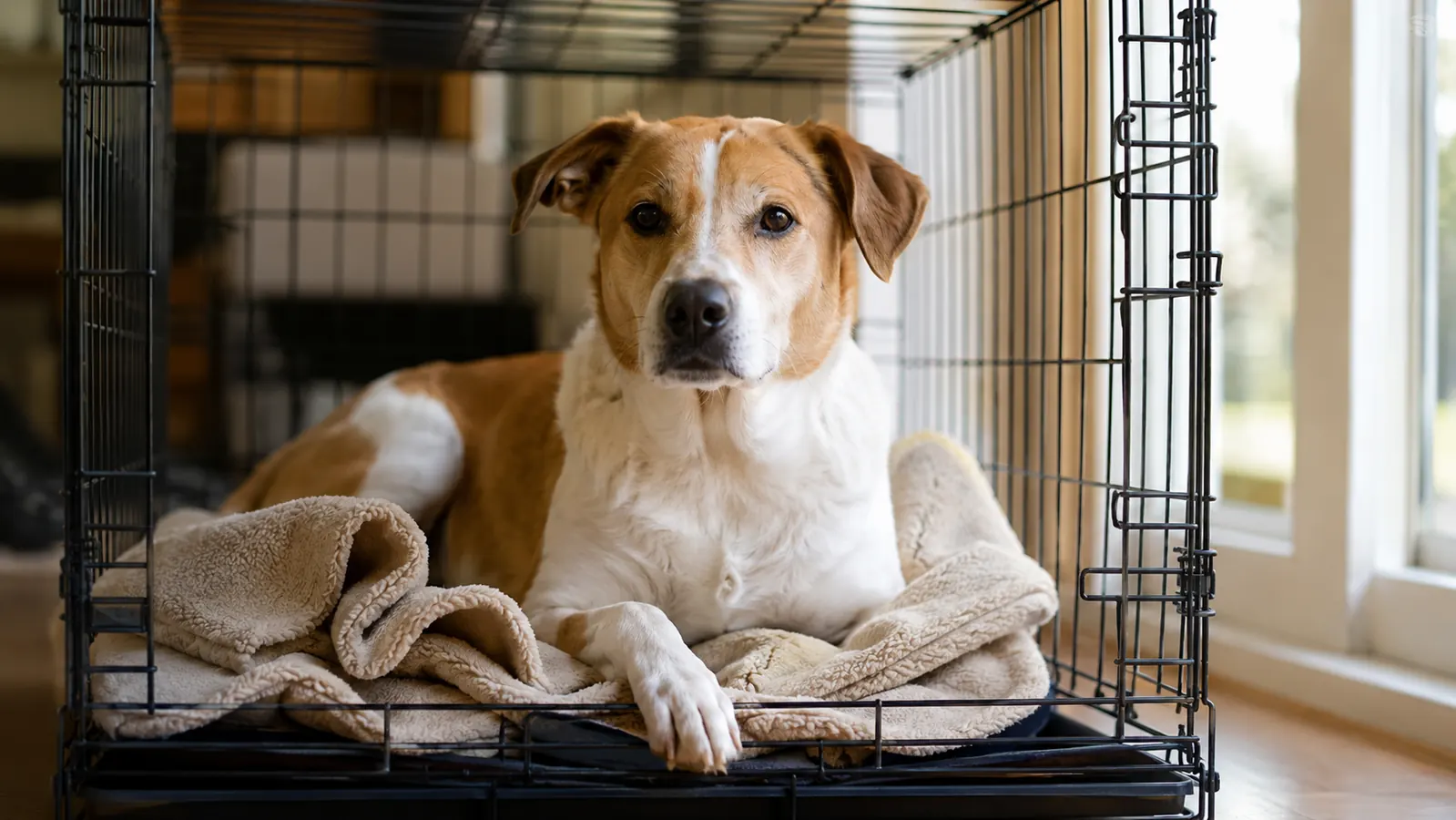
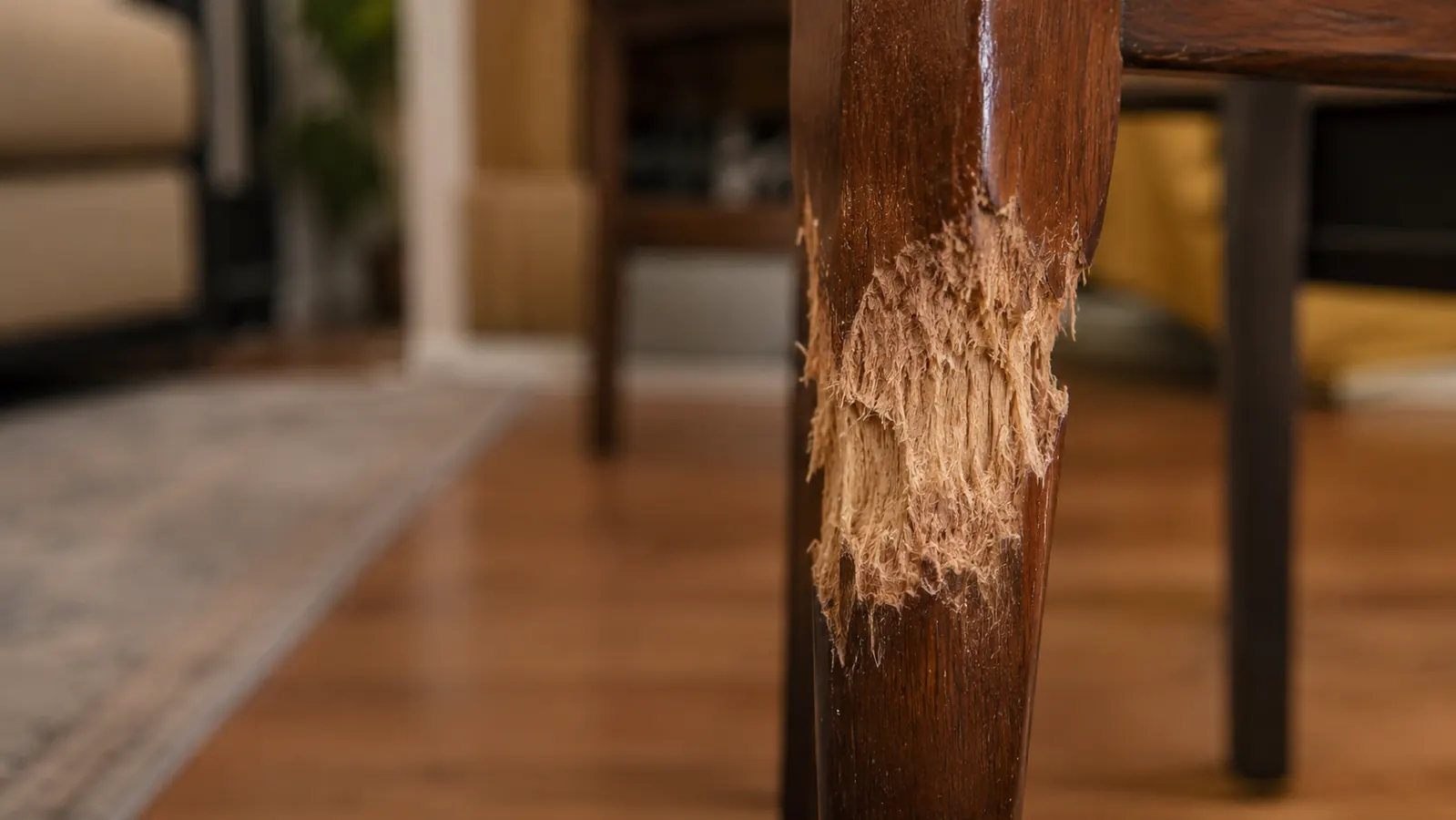
We adopted Charlie, a tan and white mixed-breed rescue, in the spring of 2024. He was about eighteen months old, forty pounds of nervous energy, and within three weeks he had eaten the corner of our good sofa, one leg of the dining chair, and a strip off the door frame near the back door. It was not spite. He was a sweet dog, gentle with the cats, all wobble and wag. He just had no idea where he was supposed to be, and an anxious dog with no anchor will find his own anchor, usually with his teeth.
I had always figured crates were for people who did not trust their dogs, or who left them alone all day. We both work from home a lot, and locking a nervous rescue in a cage felt like a punishment, so I tried everything else first. A mat in the corner, ignored. A bed by my desk, better, but he still chewed whenever we left the room. Calming chews that cost more than they helped. I was stubborn, and it cost me furniture. Still, I had a MidWest double door crate saved in my cart the whole time, halfway convinced I would need it.
What changed my mind was watching him at the vet's office. The assistant opened a wire crate to weigh him, and Charlie walked in on his own, circled once, and lay down. Calm. Not because the vet was scary, but because that little metal box gave him a job, a place, four walls he could lean against. I had spent months trying to give him comfort in the open and he had been asking, the whole time, for the opposite.
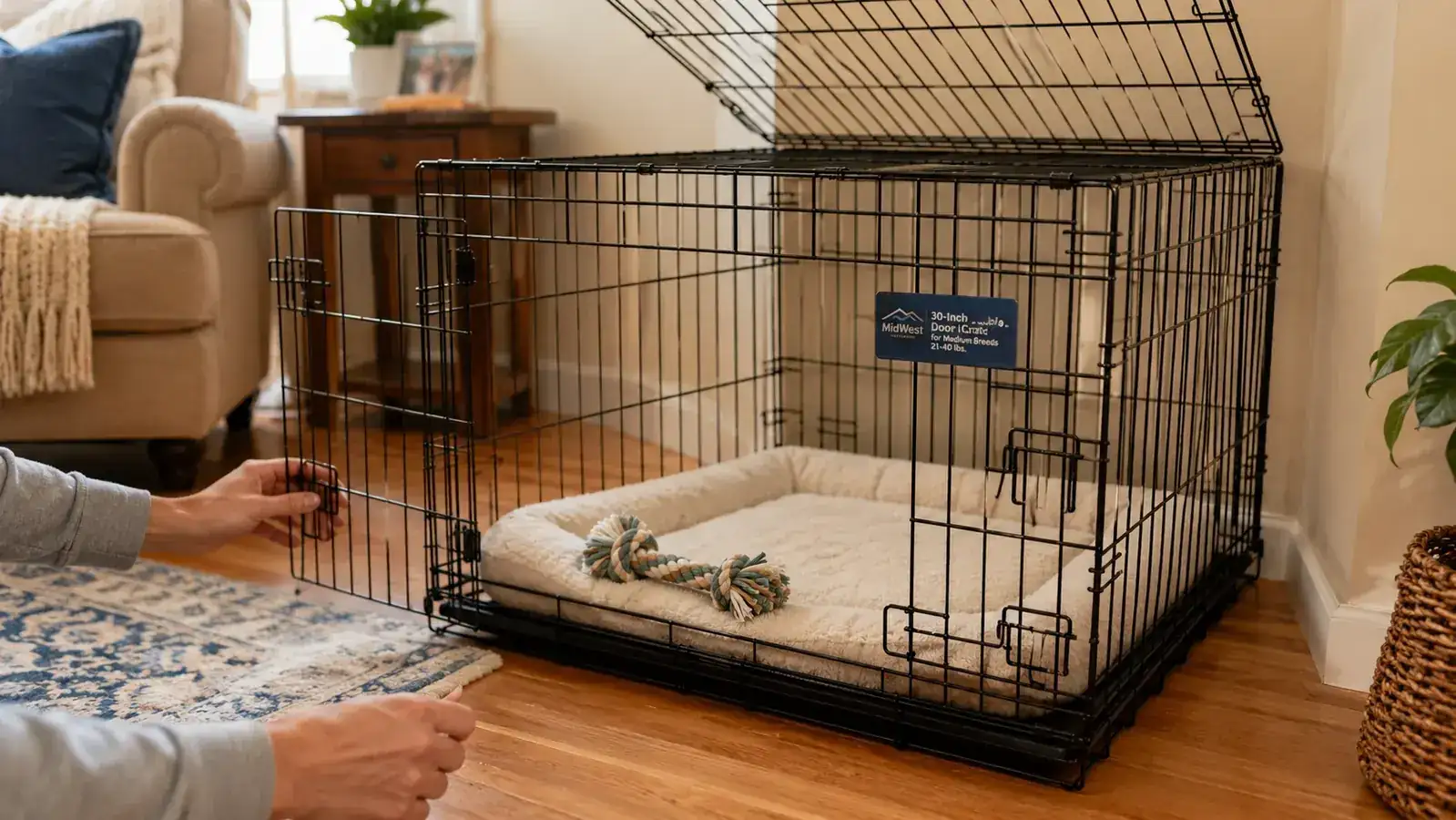
So I bought a MidWest 30-inch double door wire crate, sized for a medium dog like him, and I will be honest about the first few days. He was not instantly thrilled. A crate you just lock a dog into is a cage. A crate you let a dog discover is a den. I left the door open, tossed his favourite toys and a fleece blanket in, and dropped a couple of treats near the opening. He circled it warily the first afternoon. By that evening he was asleep in it with the door wide open.
I had been trying for months to give him comfort out in the open. He had been asking the whole time for the opposite: a place with walls he could lean against.
The furniture chewing did not stop overnight, but it slowed in a way I could measure. That first month he chewed one chair leg instead of three. By the second month, when I left the room, he would climb into his crate instead of following me to find something to eat. He was choosing it. With the MidWest, I could set it up against the wall and use the side door so it felt like a cave instead of a tunnel you could see through both ways.
If your dog chews when you leave the room, give them a place to go, not just a thing to ignore
Charlie stopped wrecking the furniture the day he had somewhere calm to retreat to, and a plain wire crate was all it took. A MidWest double door crate is a low-pressure way to give an anxious dog a den of their own.
Amazon Check Today's Price on Amazon →About six weeks in we took a trip to visit my sister two states over, and that is where the crate really earned its keep. Charlie had always been a nervous car rider, pacing between seats, panting, drooling a little. We folded the crate flat, wedged it in the back of the van, and put his blanket in. He climbed in before we backed out of the driveway. Three hours later we pulled in and he was still on his blanket, head down, quiet. A calm dog in the car changed the whole trip for everyone.
The honest part, because there is always an honest part. Wire crates are not warm-looking things. They are metal, they rattle a little on hard floors unless you put the tray down right, and they take up a square of floor space you notice. If your dog is destructive you still have to build up to leaving them in it, slowly, and never as a punishment. It is a tool, not a babysitter, and it only works if you treat it as the dog's own room rather than a timeout corner.
But the trade never stopped feeling worth it to me. Charlie still sleeps in that crate most nights by choice, door open, and if I am being honest it is a small piece of furniture that gives a nervous dog a fixed point in his world. He is calmer, the cats have their space back, and the door frame has not had a new tooth mark in a year.
What I'd Tell You If We Were Sitting at My Kitchen Table
If we were sitting over coffee, I would tell you this plainly. A wire crate is not for every dog, and it is not a fix you bolt on overnight. It only works if you let the dog make it his own, with the door open and the treats inside, so he walks in because he wants to, not because you pushed him. For an anxious chewer, that shift, from hiding place to chosen den, is the whole difference between a cage and a place of his own.
And I would tell you the part I wish someone had said to me before I lost a sofa leg. Most dogs that chew are not bad dogs. They are dogs looking for a corner of the world that is theirs, and a wire crate, for a lot of them, is that corner. It does not have to be fancy. It just has to be his. That is the whole secret, and it is not much of a secret at all.
For the anxious chewer who needs a corner of their own
A simple double door wire crate gave our nervous rescue a calm place to retreat, stopped the furniture chewing, and settled him in the car. If your dog is looking for a corner that is his, it is worth trying.
Amazon See Today's Price on Amazon →