
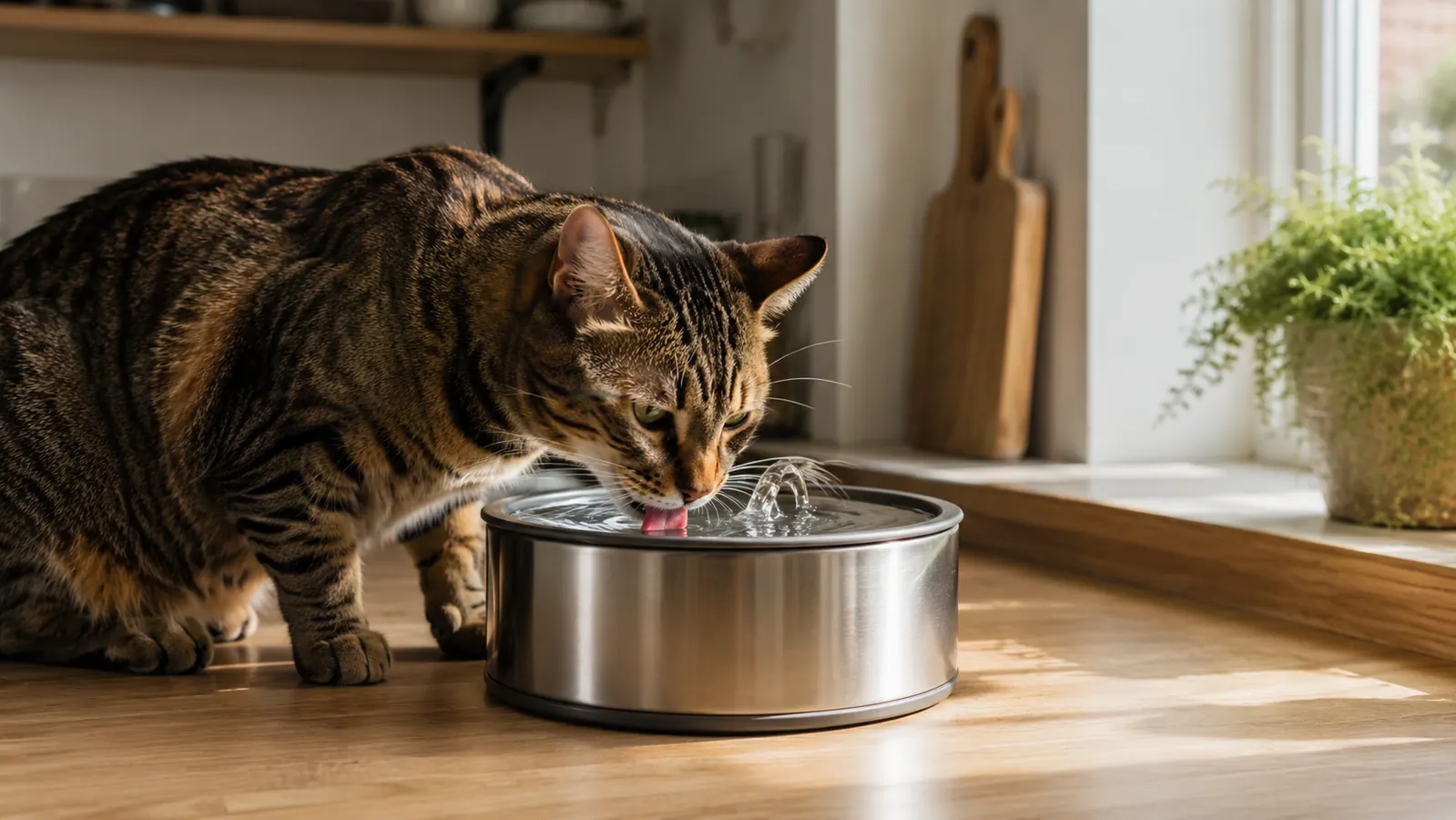
I got my first pet water fountain in 2021, for an old cat who had stopped drinking out of the bowl, and I nearly threw it in the bin on week two. Not because the cat refused it, she loved it, but because I had no idea how much maintenance a circulating fountain needs. The inside of the pump went green in under ten days, the water smelled faintly of rubber, and I was sure I had bought a gadget that was more trouble than the kidney stones it was supposed to prevent.
Then I actually read the instructions and built a proper routine, and the whole thing became fifteen minutes a week plus one deeper clean a month. That is the honest secret. A fountain is not a set-and-forget bowl. It is a small pump with a filter that needs regular attention, and the difference between a fountain that runs for years and one that dies by Labor Day is almost entirely how often you take it apart and clean it. The GIOTOHUN stainless steel fountain we run now is no different in this respect from any other, it just happens to be easier to take apart, and here is the routine I use on it, step by step, so you do not learn it the green-way.
The stainless steel fountain that finally got our cat to drink
The GIOTOHUN stainless steel fountain, with its 74 ounce capacity and a pump that is genuinely easy to strip down, is the one we have run for six months. Stainless steel is easier to keep clean than plastic, and that matters more than any feature once you see what a neglected fountain grows.
Amazon Check Today's Price on Amazon →Step 1: Empty and take it fully apart every seven days
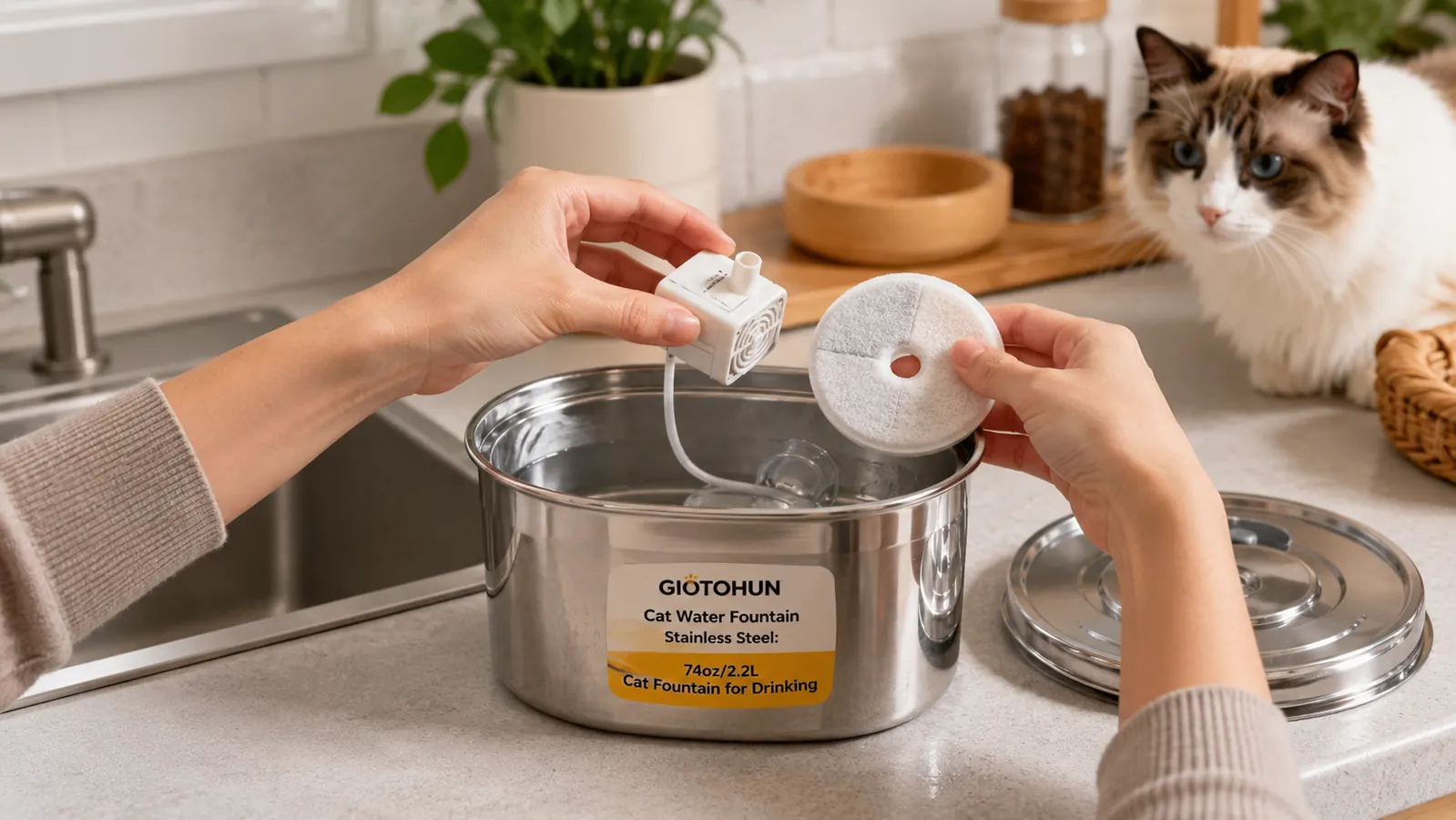
The non-negotiable habit is a weekly strip down. Pick a day, I do Sunday morning with the coffee, and set aside fifteen minutes. Unplug the pump first, always unplug it, because there is nothing that ends a fountain faster than running the pump dry or fishing around near it with wet hands. Then empty the bowl completely and pull it apart into every piece the manufacturer lets you separate: bowl, lid, the pump, and the little filter housing.
Do not skip this because the water looks clear. Water in a fountain is never as clean as it looks, because the whole point of the pump is to move water past your pet's mouth, and that water picks up saliva, dander, food dust, and floating fur. On a concrete floor in a multi-pet house like ours, it also picks up whatever the dogs track in. If you leave it, that film becomes slime, and the slime is what smells and what can grow the bacteria that defeats the whole purpose of the thing.
Set the parts out where you can see them and you already will spot early trouble, a pump that is slowing, a filter on its last legs, a hairline crack in the bowl. A weekly look at the parts is the cheapest early warning system you will own, and it catches a worn pump before it dies of a Tuesday and your cat drinks from a dish she hates for three days.
Step 2: Rinse everything, and keep the soap out of the pump
Here is the rule that saves the most pumps: wash the bowl and the lid with warm soapy water and a soft sponge, but never put soap inside the pump, and never put the pump in the dishwasher. Soap residue inside a pump impeller is sticky, it traps grit, and it slowly gums the bearing until the motor stalls. I learned this after killing one fountain by scrubbing its pump with dish soap and putting it back, only for it to seize a month later.
For the pump, a rinse under warm running water is the right move, not a soap wash. Run water through the inlet and outlet to flush anything loose, and wipe the outside with a damp cloth. That is all the pump needs on the weekly pass. If it is genuinely grimy, a tiny drop of dish soap diluted in a cup of water, given a rinse after, is acceptable, but plain warm water is the safest default and it is what I do every week.
Step 3: Scrub the bowl with the right tools
After the rinse, actually scrub, do not just swish. Use a soft bottle brush or a sponge that is reserved for the fountain so it never picks up grease or other cleaning soap. Work the inside of the bowl, the underside of the lid where water sits, and the little nooks where the pump sits. The stainless steel of the GIOTOHUN is easier here than plastic, and it is one reason I switched away from an old plastic fountain: the steel does not hold onto slime the way scratched plastic does.
Pay particular attention to any groove or seam. The pump sits in a well on most fountains, and that well is where the first film always appears, because it is the darkest, most out-of-sight corner. If your fountain has a little foam pre-filter ring around the intake, squeeze it under running water on this pass too. That ring catches the coarse junk, and rinsing it weekly takes ten seconds and keeps it from clogging the finer filter.
Step 4: Do the monthly deep clean on the pump
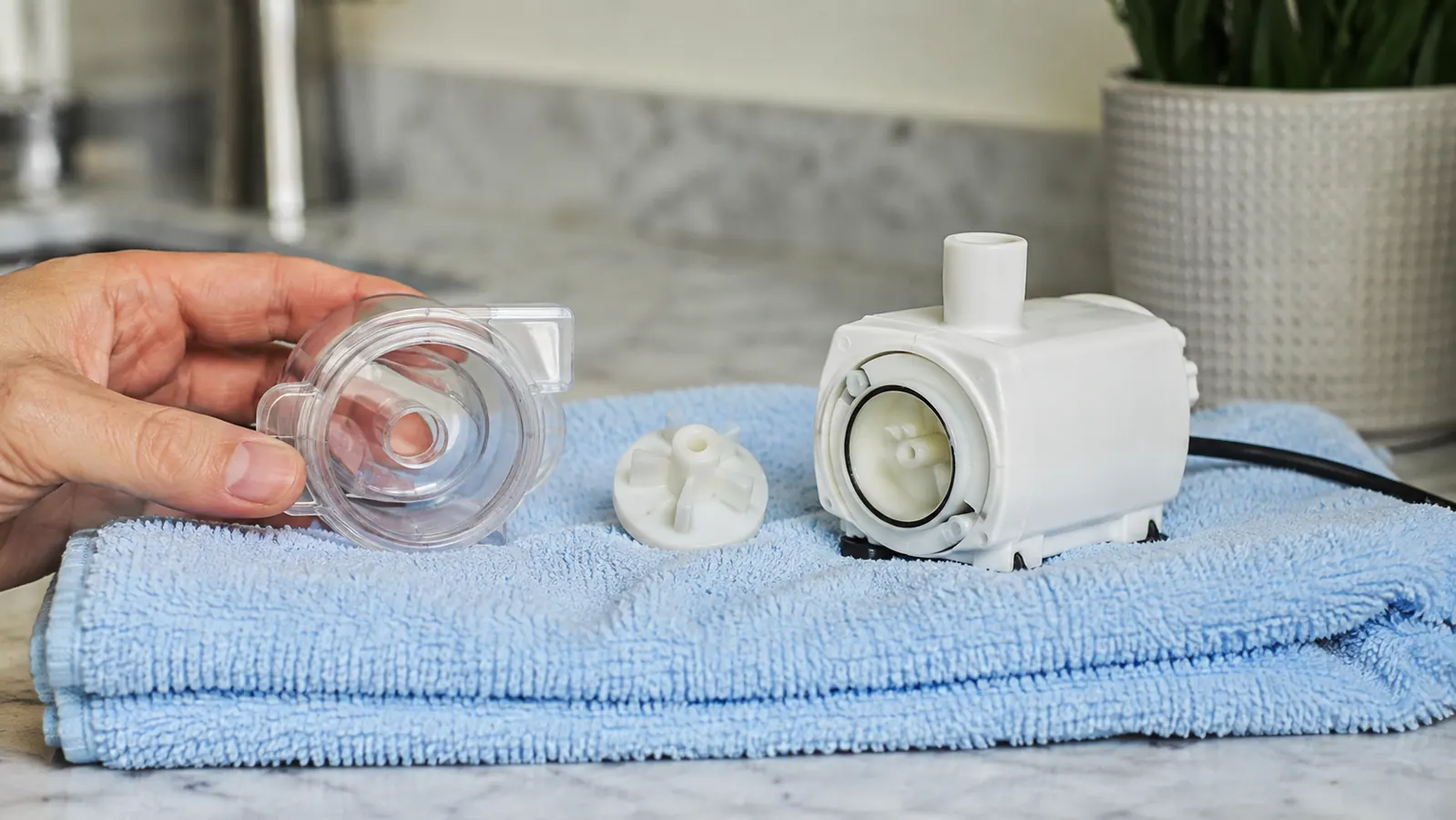
Once a month, the weekly rinse is not enough, and that is when you do the deep clean most people skip. Take the pump apart all the way, which on most good pumps means popping off the lid or front cover and lifting out the little impeller. Each pump is a bit different, but they all follow the same idea: a tiny spinning wheel in a small chamber, and that chamber is the part that clogs. The pump on the GIOTOHUN opens up with no tiny screws to lose, which is why this monthly job stays a two minute habit instead of a source of swearing.
Pull the impeller out, rinse the chamber out with warm water, and clear any hair or grit wrapped around the shaft. Hair winding around an impeller is the single most common reason a fountain that was fine last week is silent now. A lot of people who swear their pump died had nothing more than a few dog hairs wrapped around the shaft, and five minutes with the parts apart fixes it completely. Make a note of the order you remove the pieces so you can put them back, or lay them on a towel in the order they come off, which is what I do.
While the pump is apart, run a proper probiotic or vinegar and water clean of the whole fountain once a month. I mix a solution of a few tablespoons of white vinegar in a sink of warm water and soak the bowl, lid, and pump for fifteen minutes, then rinse everything thoroughly. The vinegar cuts the mineral film from hard water in a way plain soap never will. Do not use bleach or anything abrasive, and rinse completely so no taste lingers, because a cat that tastes soap or vinegar in her water will stage a protest that no fountain feature will fix.
Step 5: Reassemble, refill with fresh water, and run a flush cycle
Put it all back together in the reverse order, seat the pump firmly in its well, snap the impeller housing closed, and make sure the lid sits flush. Read your fountain's filter interval, most recommend every two to four weeks, and change the filter on schedule and keep a spare on hand so a Sunday clean never turns into a driving trip to a specialty store.
Fill with fresh, cold water, ideally filtered water if you have hard tap water, because minerals are what leave that white film on the steel and clog the pump fastest. Then do the step everyone forgets: leave the fountain running for a few minutes so the first flush of water runs through the new filter and out across the fresh bowl, then top the water off. That flush clears any fine cloudiness from the fresh filter and makes sure the pump is actually moving water before you walk away.
Finally, refill with fresh water every two to three days even between the weekly strip downs. A circulating fountain evaporates faster than you expect, and a half-empty fountain runs the pump dry, which is the other fast way to kill it. Keeping the water level topped is the one daily habit, and it is also what keeps the water tasting fresh enough that your pet actually drinks it, which is, after all, the entire point of the thing.
What Else Helps
A couple of moves make the whole job easier. Set the fountain out of direct sunlight, because sun grows algae and warms the water, and keep it away from the food bowls so crumbs do not drift into it. If your water is very hard, using filtered water skips most of the mineral film entirely. And if you have a multi-pet house like ours, run the cleaning a touch more often than the five hard rules above once summer heats up, because heat is when a fountain grows things fastest.
Keep a written note of the filter size or the model number pinned to the underside of the fountain, or snap a photo of it with your phone, so ordering the right replacement is a two minute job. A spare pump is also worth having if this is your pet's only water source, because even a well-maintained pump eventually wears out, and a cat with a dead fountain has no water at all. We keep the original pump from the fountain it replaced, which it turns out still fits, as the emergency backup.
Set a repeating reminder on your phone for the weekly strip down and the monthly deep clean, because the only thing that reliably fails about this routine is that it slips your mind until the water starts to smell. I run the weekly reminder on Sunday mornings and the monthly one on the first of every month, and I no longer rely on a whiff of anything to tell me it is time. Once the habit is on a schedule instead of on a smell, the whole fountain takes care of itself, and your cat gets clean water every day without you having to think about it.
If you are still deciding between a stainless steel fountain and a cheaper plastic one, this cleaning routine is a big part of that decision, because steel is far easier to keep properly clean, so read our stainless steel versus plastic comparison before you buy. And if you are not sure the whole circus is worth it, our ten reasons a circulating fountain keeps cats hydrated makes the case for why cleaning one at all is the right call. The work is real, but so is the payoff: a cat that drinks water the way she is supposed to.
The pump I nearly threw away was not broken at all. It had three dog hairs wrapped around the shaft, and five minutes of taking it apart fixed it completely.
The fountain that is actually easy to take apart and clean
Every fountain needs this routine, but not every fountain makes the job easy. The GIOTOHUN stainless steel model comes apart into simple pieces, accepts standard filters, and its pump opens up for the monthly clean without any tiny screws or swearing. That is the whole reason we have kept this one for six months while the plastic fountain before it got donated to the garage.
Amazon Check Today's Price on Amazon →