
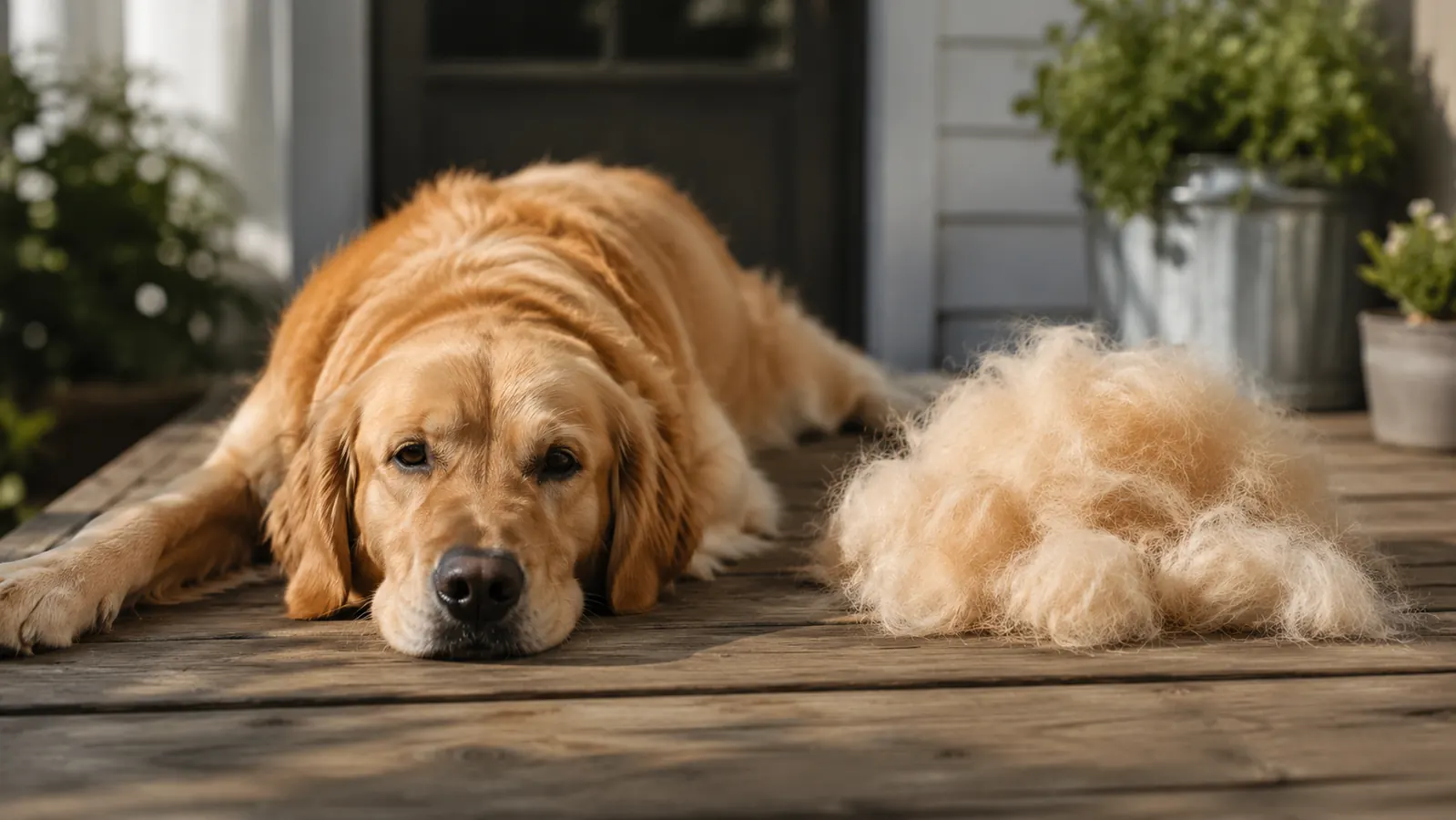
Spring comes around every year and every year I wonder why I did not start deshedding in February. My golden retriever Juno, nine years old and seventy pounds, blows her whole undercoat in about three weeks. For a while we just lived with it. Hair drifted off the sofa in ropes, stuck to my jeans, and collected in the corners in what my wife called tumbleweeds. A normal brush skimmed the top of her coat and made a mess without ever touching the fur that was actually falling out. It felt like sweeping the floor before somebody sanded the walls. Then I finally learned there is a right way to brush a heavy shedder, and the job went from a daily losing battle to a ten minute appointment I do twice a week.
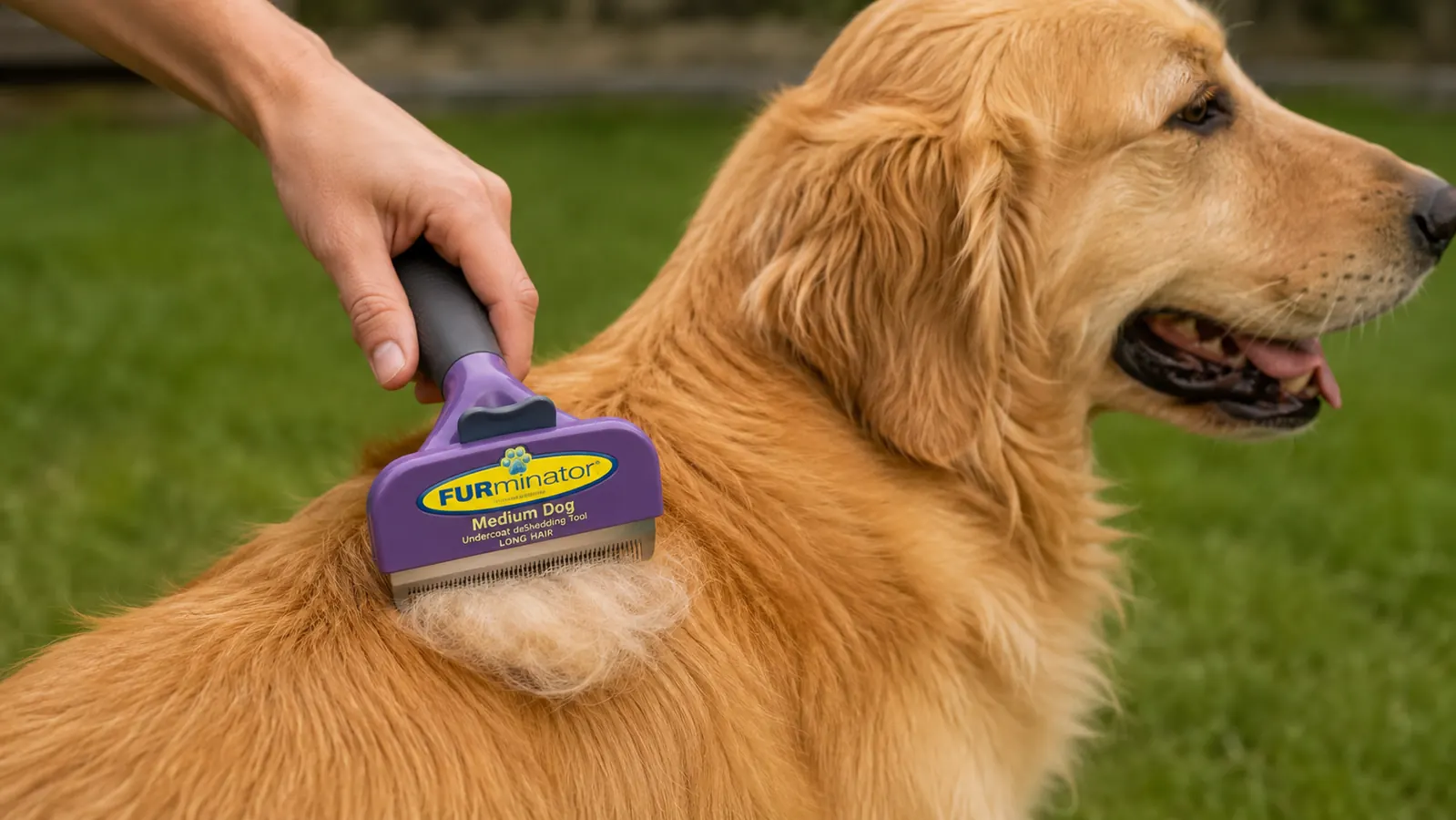
The tool we reach for is the FURminator medium deshedding tool. A wide stainless steel edge reaches down into the undercoat rather than a brush that only skims the top. The difference matters. A regular brush catches the long guard hairs and leaves the soft undercoat in place to shed onto the furniture. A deshedding tool is built to sink into that undercoat and pull it out before it ever falls off the dog. If you have never used one properly, or you tried once and the dog hated it, this guide is for you. I will walk through the whole routine in the order I actually do it, including the mistakes I made at first that turned it into a five minute wrestle with a very opinionated dog.
The Deshedding Tool We Reach For Every Time
For a medium dog with a thick double coat, the FURminator Medium Undercoat deShedding Tool is the one that stays in the grooming drawer. The stainless edge glides under the topcoat and lifts the dead undercoat out in strokes rather than clumps.
Amazon Check Today's Price on Amazon →Step 1: Start With A Clean, Dry, Tangle-Free Coat
Never start deshedding a wet dog, and do not start on a coat full of mats. A deshedding tool works by reaching between the guard hairs into the soft undercoat, and it cannot do that if the topcoat is tangled or the fur is damp and clumped. Give the dog a full body comb-through with a wide-tooth comb first so there are no knots. If you find a mat, work it out with your fingers or a mat splitter before the blade ever touches it. Pulling a deshedding tool over a knot is how you hurt a dog and how you dull the edge, and neither is worth saving a minute.
A bath is not a requirement here. In fact I keep the coat dry for the main deshed and then bathe after, because the loose undercoat comes out far easier as dry fluff than as wet matted fur. For Juno I brush her on the back porch on a dry day so the loose hair rides away on the breeze instead of settling on the floor. If you are working indoors, brush over a garbage can or do the job right before you vacuum, because no matter how careful you are there will be a little fall-out.
Step 2: Work In Sections, Following The Hair's Direction
Split the body into manageable sections instead of stabbing at the whole dog at once. I do the back, the sides, the chest, the rear and the tail as separate passes. Working in sections means I can see which areas still have undercoat to lift, and it keeps the dog calm because I am not moving the brush all over at random. Always brush in the direction the hair grows, from the head toward the tail and down the legs. The FURminator is meant to be used with the grain, not against it. Going against the grain tugs and turns the dog into a corkscrew in about four seconds.
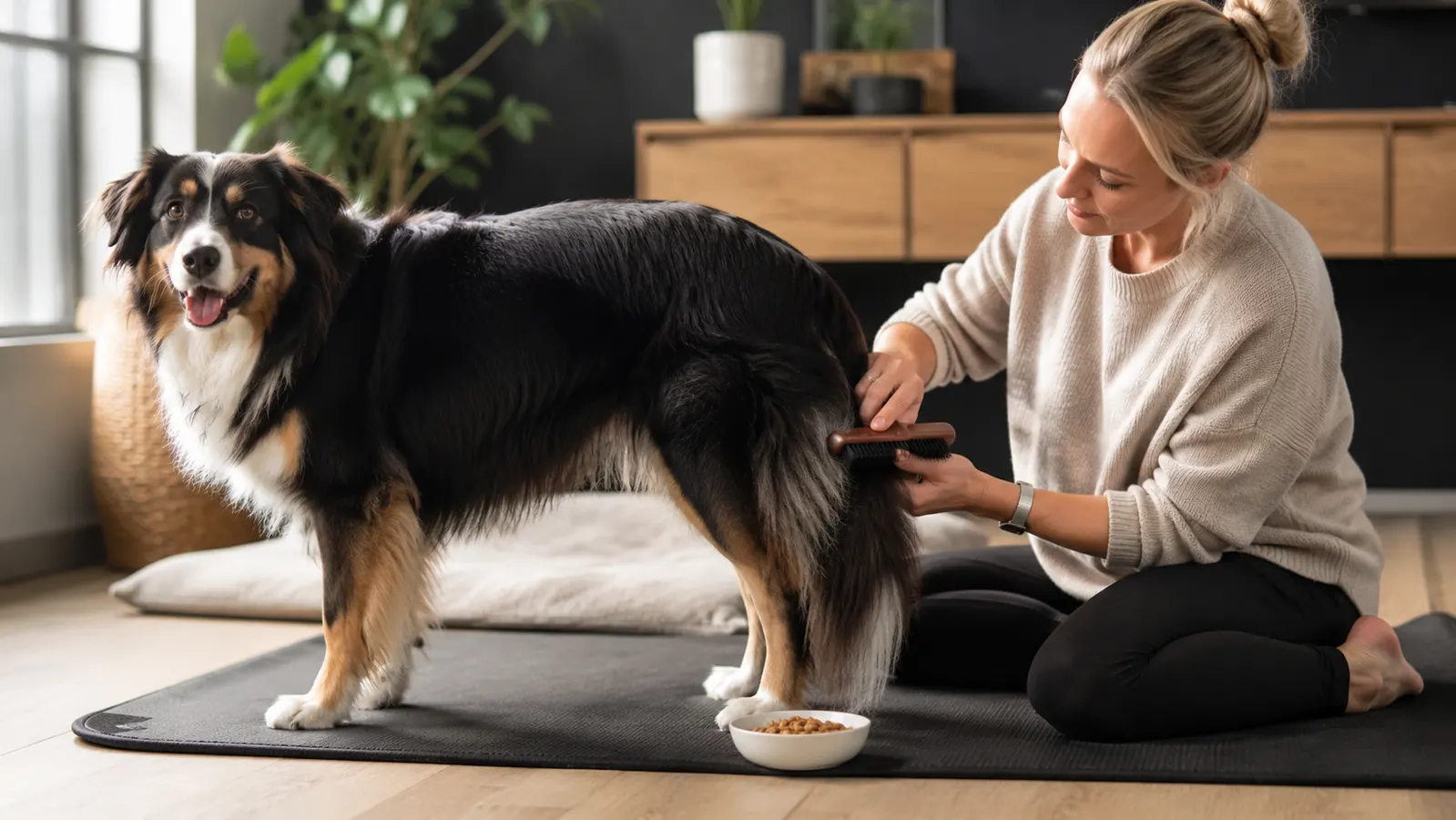
I also found it helps to stand the dog rather than have her lie down. A standing dog relaxes, and I can reach the flank and back legs without her hips getting sore. If your dog is small, a grooming table at waist height saves your back, but for a seventy pound dog the floor or a low stool beside her works fine. I spread a cheap rubber grooming mat underneath so she has solid footing and does not slip on the deck. A dog with solid footing stands still, and a still dog means a clean stroke.
Step 3: Use Short Strokes With Light Pressure
This is the step most people get wrong, and it is the reason so many dogs run from the brush. The tool should do the work, not your arm. Use short, gentle, overlapping strokes and let the stainless edge catch the undercoat on its own. You do not need to bear down on the handle to make it work. Brushing with heavy pressure against the skin will irritate the coat and the dog, and it can leave the skin red if you work the same spot over and over. If the blade is pulling or dragging, you are pressing too hard or the coat is matted, and the answer is never to push harder.
The tell is in the hair the stroke pulls out. A proper stroke lifts out soft, loose undercoat in a satisfying curl, and the dog barely notices. If a stroke is sharp or the dog flinches, lighten up. Every few strokes the edge fills up and stops grabbing. When that happens, do not keep brushing with a packed blade. That is when you get friction and heat on the skin instead of a clean cut through the undercoat, and it leaves the dog sore enough to dodge the brush next time.
Step 4: Clear The Tool Often And Follow A Set Order
The FURminator has a push button on the handle that ejects the collected hair, and I press it after every few strokes. A full edge is useless. Clearing it constantly keeps the edge working against the skin instead of buffered by fur, and it means the hair ends up in one pile instead of scattered around your feet. Juno knows the click sound by now and does not move when she hears it. The habit of clearing the tool is what separates an efficient five minute deshed from an endless one that goes nowhere.
Follow the same order every time so you never miss an area and the dog learns what to expect. I do the back in two passes, then the chest, then each side, then the rear, and I finish with the tail. The hindquarters carry the heaviest undercoat on a golden, so I give that section extra care even though it is the spot she is most nervous about. I leave the head and face for a small soft brush, because the deshedding tool is too coarse for the delicate fur around the ears and eyes.
Step 5: Follow Up With A Slicker Brush, Then Bathe
Once the undercoat stops coming out in curls, I go over the whole body once more with a slicker brush to catch the loose topcoat hairs the deshedding edge left behind and to smooth everything flat. The two brushes work as a pair: the deshedding tool reaches the undercoat, and the slicker finishes the surface. Then, if it is bath day, I wash her with a gentle dog shampoo and watch the last of the loose hair rinse down the drain. A thorough bath after a good deshed feels like the cherry on top, and it keeps the coat from shedding all over the house again the moment she dries off.
Afterwards I rinse the tool under warm water, shake it dry, and let it air out. Stainless steel holds up well as long as you do not leave it wet or let it rust. I have had the same FURminator medium for about four years now and it still cuts through Juno's undercoat cleanly each spring. Keeping the edge clean is the whole maintenance routine, and it takes about a minute.
How Often Should You De-Shed?
For a heavy shedder like a golden, a lab, or a husky, I aim for two to three deshedding sessions a week during the two shedding seasons, spring and fall. Between seasons, once a week keeps the coat from building up. If you keep up with it, each session gets shorter. Juno's sessions go from about fifteen minutes in March down to eight by June, because the undercoat never gets the chance to pile up. The first few weeks are the heaviest, and they are exactly when it is worth doing the job twice a week instead of once.
In our house the difference shows up on the sofa. When we were only using a normal slicker brush, I was vacuuming every other day and the couch still looked like it was wearing a fur coat. Now, with a real deshedding routine, the weekly haul comes out on the brush instead of the furniture, and vacuuming drops to about once a week. The fur does not disappear, but it ends up where I can sweep it up instead of embedded in the fabric.
The first real deshed took a grocery bag of fur off Juno's back. It was the same hair that had been ending up in my coffee, I just finally got it out before it fell on the floor.
What Else Helps
The deshedding tool does the heavy lifting, but two extras make the routine much easier. A good slicker brush handles the finish and the more delicate spots, and I explain the difference between the two in my close look at a deshedding tool versus a slicker brush. Keeping up a regular schedule matters more than any single tool, which is why I wrote out the reasons deshedding weekly keeps fur off the furniture in the first place. When people tell me they tried a deshedding brush and it did not help, the usual reasons are the wrong coat length for the tool, too much pressure, or brushing only once a month.
One thing I will stress: patience beats force every time. If your dog has never been brushed this way, give them a treat at the start and go slow over just the shoulder the first session, then add a new area each time. A few short sessions beat one long wrestling match, and a dog that trusts the brush will stand still for you. Mine now dozes off while I work her back. That is the version of de-shedding worth building toward, and it is how a chore turns into a small ritual I actually look forward to.
Two Mistakes That Nearly Made Me Give Up
Before I settled on this routine, I made two mistakes that are worth naming so you do not repeat them. The first was using the tool on a coat that was not fully tangle-free. The edge caught a mat behind Juno's ear and pulled hard enough that she yelped and refused the brush for a week. The second was pressing down thinking more force would mean more fur. It just meant red skin and a dog that hid under the table at the sight of the handle. Both problems came from technique, not the tool, and both fixed easily once I switched to short, light, in-the-grain strokes on a combed coat.
If your dog has a short single coat, a deshedding tool is likely more tool than you need, and a rubber curry or a slicker will do the job. Pay attention to what your dog actually sheds. A double-coated dog that mats easily is exactly where this routine earns its keep, and a single-coated short coat just does not have the undercoat for the edge to catch. Matching the tool to the coat is half the battle, and it is why I do not recommend one deshedding tool for every dog.
Stop Living With Fur On Every Surface
A ten minute routine twice a week with the right tool will pull the loose undercoat before it ever reaches your sofa. The FURminator Medium is the one we have used for four years across two heavy shedders.
Amazon Check Today's Price on Amazon →