
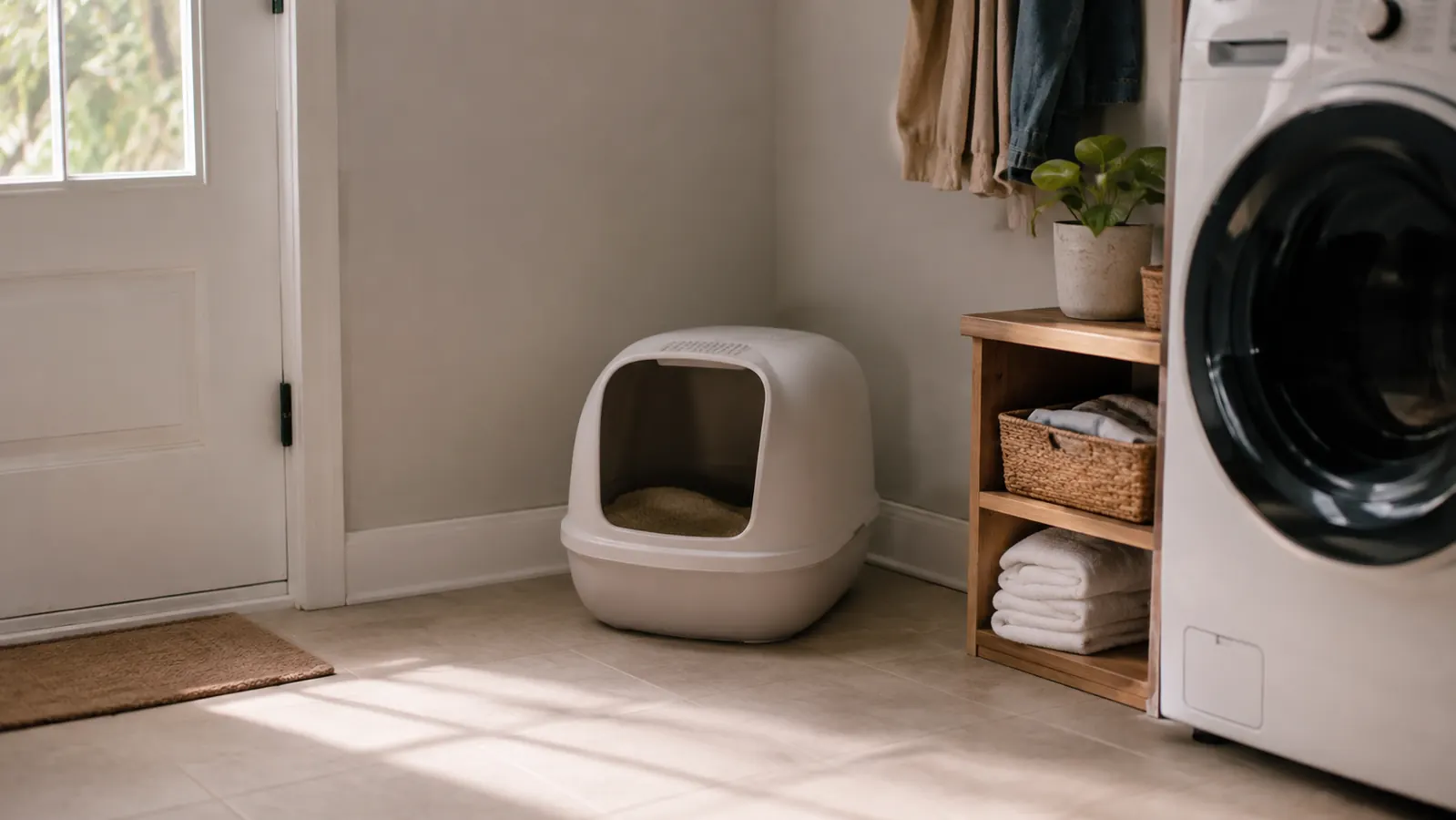
I want to start with the reason most people end up searching for a top entry litter box at all: the dog. Ours is a 45 lb Lab mix named Ranger, and he decided early on that the cat box was a buffet he had every right to. Three times I found him with his nose buried in a front opening box, and once he knocked the whole thing over and sent clay litter rolling across the bathroom floor. That was the morning I stopped looking at ordinary covered boxes and started considering the ones cats have to climb into.
I had tried the usual fixes first. A covered front entry dome, a heavy tray, even wedging the box between the washer and the wall. Ranger outsmarted every one of them, because a dog that big can push a front flap aside no matter how. The top entry box is a different idea entirely. There is no front door to push. The cat has to jump up and go through a hole in the roof, and a 45 lb dog is not going to do that. Ten months ago I bought the IRIS USA Large Top Entry box and set it up in the laundry room. This is the long report.
The Quick Verdict
It stopped my dog from raiding the cat box on day one, and ten months later it still holds odor better than any open or front entry box I have owned. The top opening does ask a little more from the cats, and one of ours needed a week to trust it.
Amazon Check Today's Price →If You Are Tired Of Finding Your Dog In The Cat Box, Start Here
A hooded top entry box closes off the one route a dog always finds. Ten months in, it has been the single fix that held in this house, and we keep a second one for our older cat's second box.
Amazon Check Today's Price on Amazon →How I've Used It
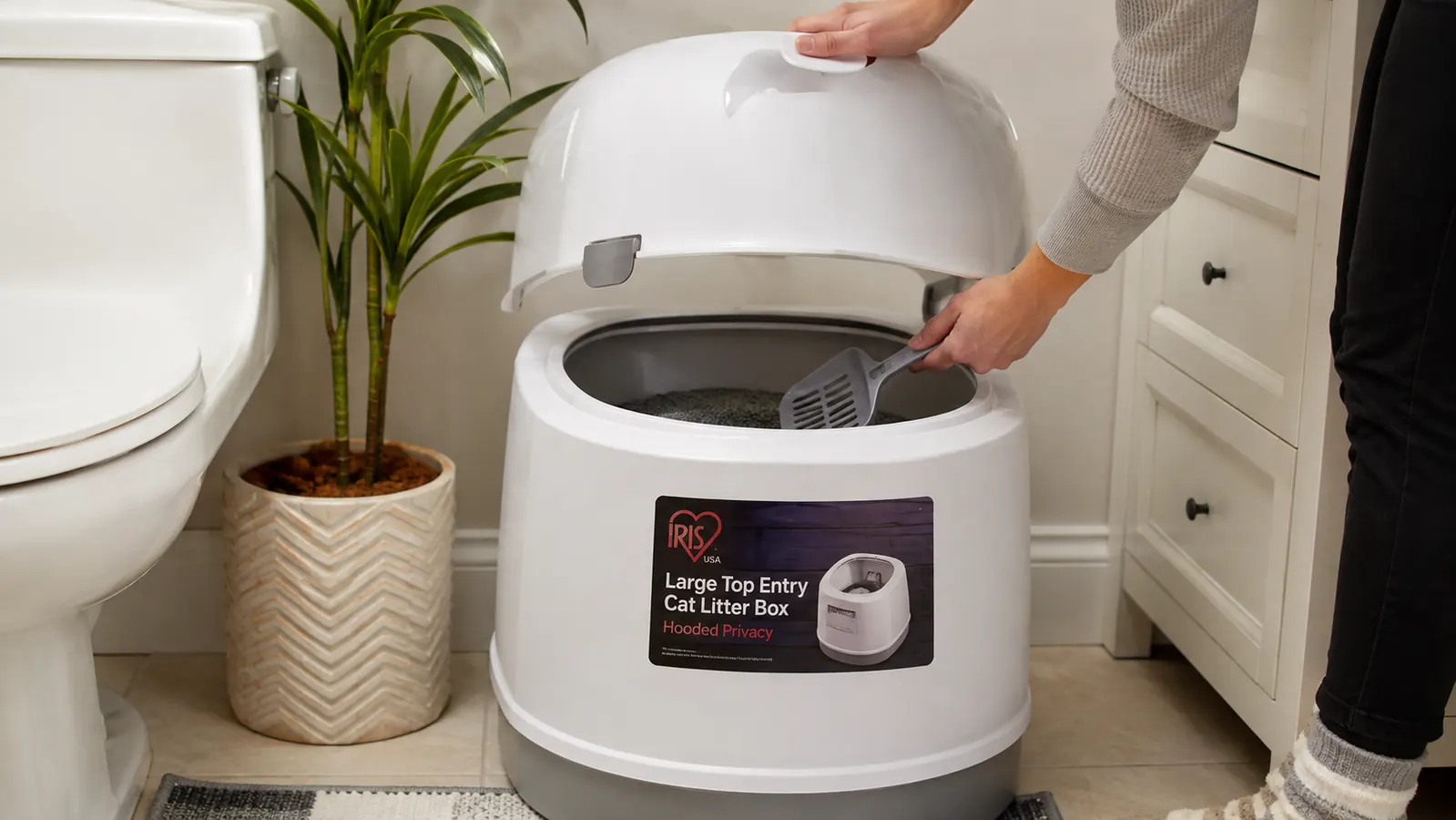
Setup took about ten minutes out of the box. The whole thing arrives as a base tray and a rounded hood, a charcoal plastic dome that sits on top of the tray and hides the litter inside. There is a cut opening in the top of the hood, framed by a rim, and that is where the cat climbs in and out. You lift the hood off for the weekly deep clean, which I will come back to because it is the part that surprises people.
I run two cats, so I actually bought two of these and put them in opposite ends of the house. One lives in the laundry room, the other in a corner of the hallway off the kitchen. Mabel, our 11 year old tabby, took to it in about two days. Our younger one, a 2 year old grey house cat we call Smudge, was skittish for the first week. He kept sniffing the rim and walking away. I coaxed him with a handful of his favorite treats on the rim, and by the second week he was using it without a backward glance.
The box is a genuine large for top entry boxes, which matters. I fill it with about three inches of clumping litter and the tray holds a good volume, so it does not need refilling every couple of days. Mabel weighs nine pounds and Smudge is a chunky thirteen, and both have plenty of room to turn around inside. A big cat or a kitten with short legs will manage the jump fine; I will flag the older and arthritic cats in the skip section further down.
The Dog Problem, Solved
This is the headline feature for us, so I tested it hardest. Ranger had been getting into the front entry box for months, and the moment I put the top entry box in, he lost interest completely. The whole litter is hidden behind a hood, there is no opening at floor level for him to nose under, and the only way in is over the top. A 45 lb dog is not going to climb through a hole meant for a cat. Since the swap, I have not caught him so much as sniffing near either box.
If your problem is a dog this is worth the switch on its own, and it is the reason I would choose a top entry over any front opening covered box, no matter how heavy. I tested that too, years ago, with a front dome that Ranger knocked over anyway because the whole unit tipped when he leaned on the flap. The top entry design is lower and heavier in a way that plants it. Ranger has bumped both of our boxes with his shoulder and neither so much as shifted a quarter inch.
Odor And Tracking Over Ten Months
Odor control is the second reason people pick a hooded top entry box, and this one does a good job, with one clear limit. The hood traps a lot of the smell inside, which you absolutely notice in a laundry room you walk past ten times a day. The waste is mostly hidden down in the tray behind the front wall, and between scoops the room does not carry that low cat box smell the way our old open tray did. Ten months in, that still holds. It is the thing that surprised me most, because I half expected the hood to make no difference.
Tracking is where I keep my expectations realistic, and I want to be honest here. This box reduces tracked litter, it does not end it. The cat still has to jump up and hop down, so a few grains come out on the landing side. But because the box is enclosed, the bulk of the litter that used to spill out the front and scatter stays inside the tray. We went from sweeping the floor daily to every couple of days. Litter that does come out clings to the rim and drops close to the box, not across the whole room, which is a real improvement.
The limit on odor is that you cannot let this box go the way you might an open tray. Because the waste sits inside a closed hood, it can get funkier faster if you skip scooping. I scoop both boxes once a day and it is never a problem. If you are someone who scoops every other day or less, the enclosed design can work against you rather than for you, and I would steer you toward a box with better airflow or a far more frequent habit.
Ten months in, the odor story has not drifted for the worse, and that is the real test of a box like this. Some enclosed plastic boxes start to hold a smell in the plastic itself after a few months no matter how carefully you rinse them, until the whole unit begins to carry a faint sour note. That has not happened with our IRIS. A hot soapy wash keeps the inside of the hood neutral, and the charcoal filter up in the top, which I swap every eight weeks or so, still does its quiet job. I walked into the laundry room this morning the way I do every morning, and there was nothing at the door to catch.
One more thing worth knowing about odor, and it is the sort of detail nobody puts on the box. Because the opening is up on top, a cat that stands tall to dig can fling litter up toward the rim, and the hood catches most of it before it escapes. That little front wall behind the hood also holds in a lot of the odor that an open tray lets drift straight out at shin height. It is not a substitute for scooping, but it is why the hallway does not announce the box from three rooms away the way it used to.
The real proof for us was the morning Ranger trotted past the laundry room without a second glance. Months of pushing him out of a front entry box ended the day the only way in was over the roof, and he has not once tried the climb.
What I Liked
- The top entry design stopped our 45 lb dog from raiding the box on day one, with no exceptions in ten months
- The hood holds odor well between daily scoops, honestly better than our old open tray
- Reduces litter tracking to a few grains near the box instead of a scatter across the room
- Large interior gives medium and large cats room to turn around comfortably
- Rounded hood is a breeze to lift off for the weekly deep clean and wipes down fast
Where It Falls Short
- The covered design traps smell faster if you skip scooping, so daily scooping matters more
- Some cats, especially older or arthritic ones, will resist the top opening and may need a coaxing period
- Elevated entry means a few grains of litter still come out on the landing side, it reduces rather than eliminates tracking
- No scraper edge built in, so I keep a scoop handy and wipe the rim clean each week
The Cleaning Routine You Need
The hood makes cleaning easier than I expected, and here is the part most reviews skip. Because the whole top lifts off, you do not have to lean in through a front door or reach around a flap. I lift the hood, set it aside, and the tray is a wide open pan I can scoop in seconds. For the weekly deep clean I slide the litter aside, scrub the tray with hot soapy water, rinse the hood in the tub, and let both dry. The smooth plastic does not hold onto smells the way a textured box will.
Two small things to build into your routine. First, wipe the rim around the top opening each week. That is where litter dust and urine splatter from the climb lands, and it is the one spot that can build a smell if you ignore it. Second, because I have two cats I keep a strict one box per cat minimum with a spare, and I already mentioned a second box clamped. If you only clean when the box looks full, an enclosed box will let you down.
The Scooping And Cleaning Effort, Done Honestly
Let me be plain about the one thing that really is different with a top entry box, because it is the detail nobody puts up front. You cannot scoop this box standing at floor level the way you can an open tray. You either lift the hood off each time, and on our IRIS the hood comes away in one light piece that takes two seconds to set on the dryer, or you lean in through the top opening and scoop at arm's length. I do a mix, but most mornings I just lift the hood because it is so easy, and then the whole litter area sits right there like an open pan. The job is honestly faster than it ever was with a front door I had to hold open with one hand while I scooped with the other, and that alone was worth the switch for me.
Build And Fit After Ten Months
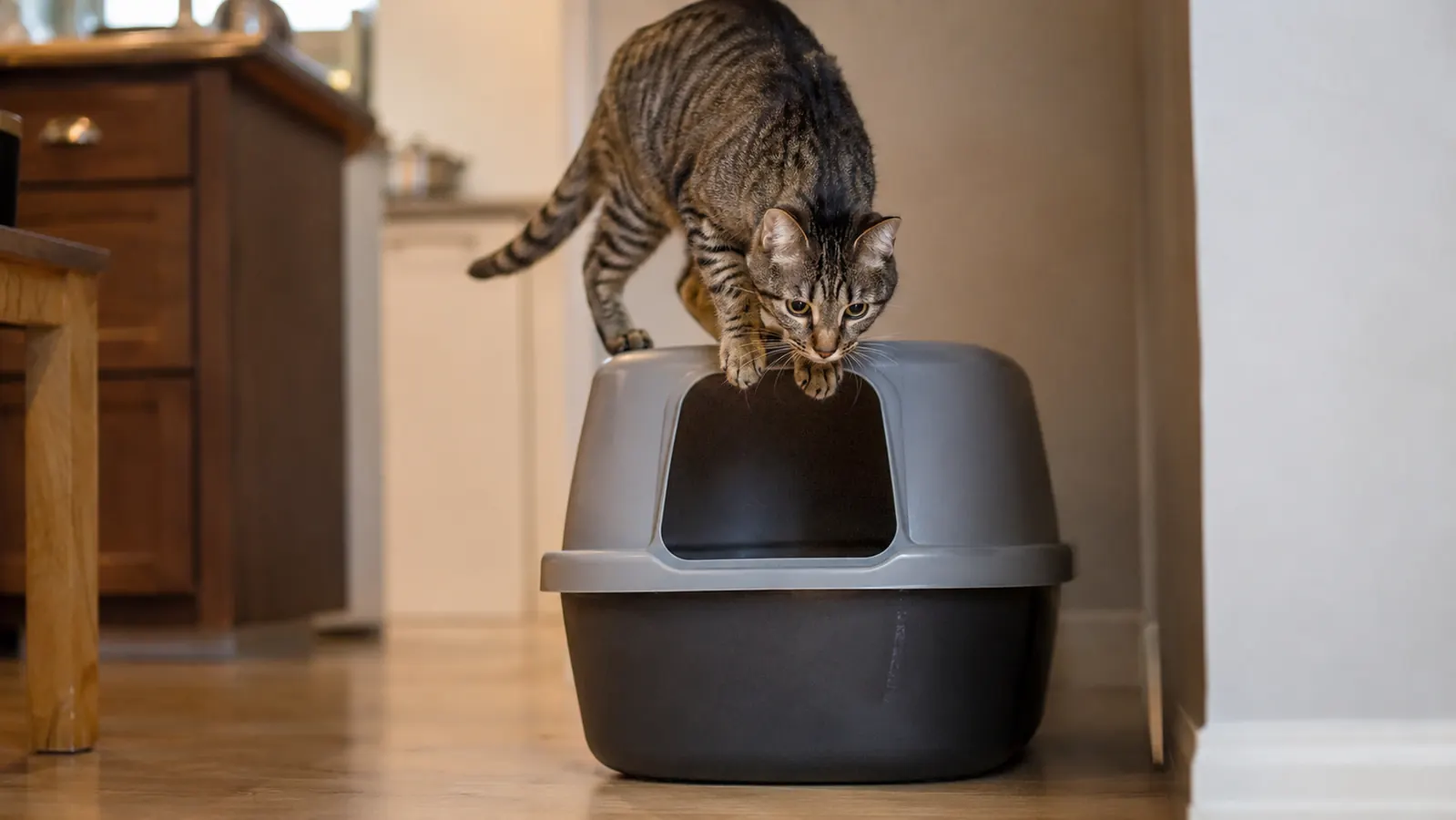
The plastic has held up well to ten months of daily use and the occasional dog shoulder. It is sturdy, not flimsy, with a solid base that does not flex when I lift a full tray off the floor. The hood sits on with a decent friction fit and has not cracked or warped from the heat of a hot summer laundry room. There is a small carbon filter in the top of the hood to help with odor, and I replace it every couple of months, which is cheap and easy enough that it has not become a chore.
The rim around the top opening deserves a mention too, because it is where the wear shows first. Ten months of cats hopping in and out means claws land on that lip constantly, and I expected it to get scratched and rough. It is still smooth, with only faint surface marks that I cannot feel with a finger. The hood is made as one solid piece rather than a lid snapping onto hinges, and that single piece construction is a large part of why it has not developed a rattle or a weak seam where so many covered boxes come apart.
One honest fit note for bigger cats and long legged kittens. Smudge is a thirteen pound cat and he fits fine, but there is not a lot of spare height inside, so a large maine coon or a very tall cat might feel cramped. Measure your cat honestly before you buy. For a normal domestic cat this is a comfortable size, and the tradeoff for the dog proofing is a slightly taller, more enclosed footprint that some cats will simply not love.
Which Cats Accept A Top Entry Box
In my house the answer was two out of two, but only because I stopped rushing the nervous one. Mabel, the older tabby, hopped in on day two as if the box had always been there, because she likes a private corner and the hood reads to her as a cave. Smudge took the full week. What finally turned him was leaving the hood off for one night so he could inspect the open tray, then setting the hood back on the next morning. He climbed the rim to look, dropped in on his own, and has used the IRIS every day since. If your cat is the careful type, do not fight them about it. Give them a few days and a treat on the rim, and most will accept the climb.
Who This Is For
This box is for anyone with a dog that raids the cat food, the litter, or both, because the top entry is the one design a dog cannot push open. It is also a good fit if you are tired of litter scattered across your floor or want a quieter visual than an open tray in a room you use. If you have a couple of average cats that are willing to climb, and you are prepared to scoop daily, this will serve you well for years. The hood does the heavy lifting on odor while you do the daily scoop.
Who Should Skip It
If you have a senior cat with arthritis or a kitten with very short legs, the top entry climb can be a real barrier, and there are plenty of lower, front opening boxes that will suit them better. Skip it too if you do not want to scoop daily, because an enclosed box traps smell faster than an open one. And if you have a very large cat such as a maine coon or a tall breed, the interior height may be too snug, so check the size against your actual cat before you commit.
Make This The Last Night You Shoo The Dog Out Of The Litter
Ten months in, this box ended the dog raids, cut our tracked litter, and kept the laundry room smelling like a laundry room. If your household is fighting the same fight, the top entry box is the fix that held for us.
Amazon Check Today's Price on Amazon →