
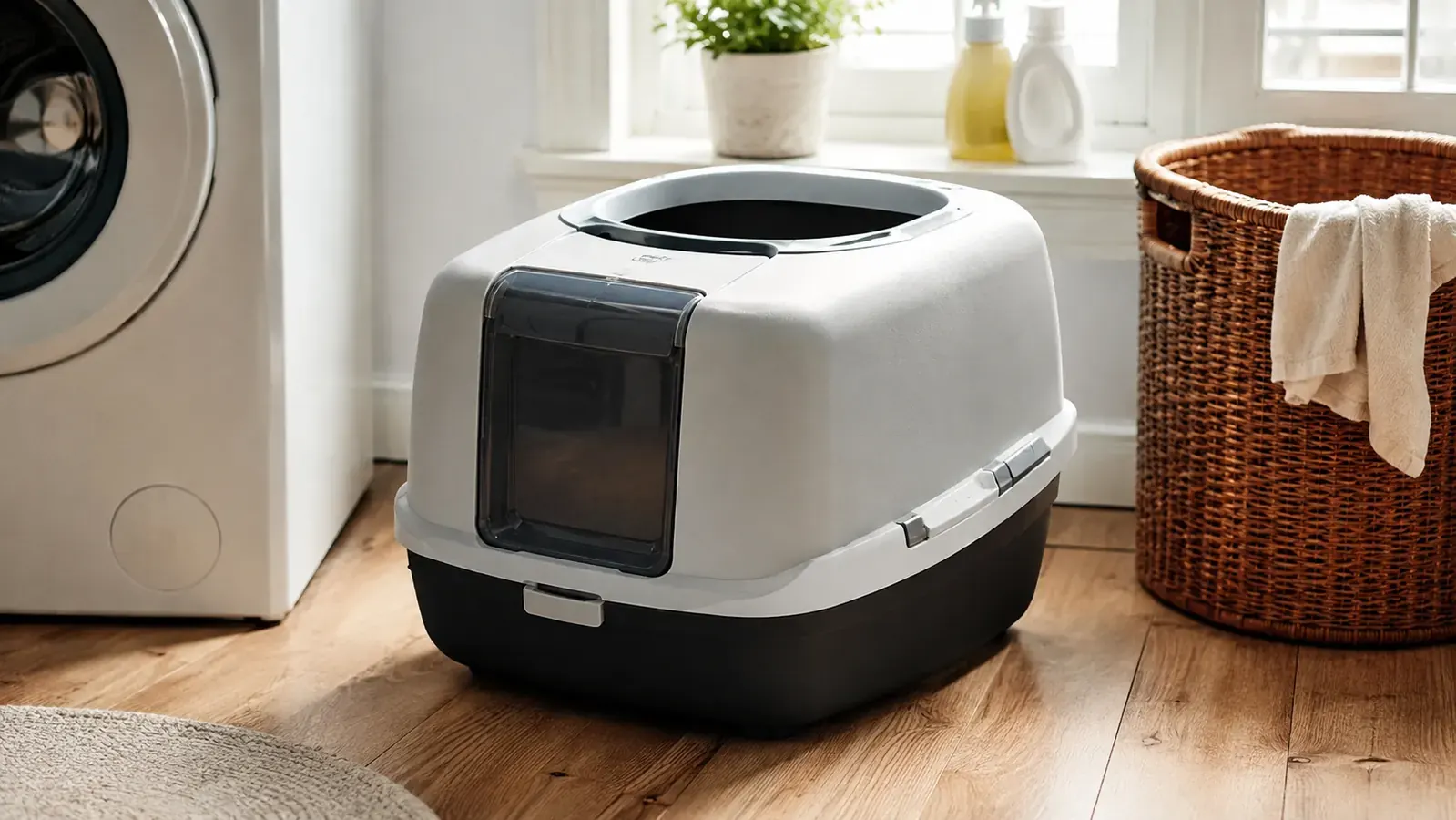
Every morning for the last year I have done the same thing: grab the scoop off the hook beside the washing machine, lift the lid off our IRIS top entry box, and fish out what two cats leave behind. Here is the honest part that the five star reviews leave out. The box genuinely does what it promises, and I would buy it again. But scooping through that top opening is harder than the photos suggest, and if the only cat in your house is old, heavy, or sore in the hips, this may be the wrong box for you no matter how much litter it keeps off the floor.
I have kept cats for over thirty years, long enough to have scrubbed every kind of box: a plain pan, a covered box with a front door, and now this top entry one. So I did not buy it for the looks. I bought it because the dog, a mutt named Gus, treats a front entry litter box like a snack bar, and because I was tired of sweeping a fan of clay pellets out of the kitchen doorway twice a day. This box has stopped both problems. But an honest review has to give you the tradeoffs too, the stuff you only learn after you own one, so here it is.
The Quick Verdict
The best odor and tracking control I have found in a plain, non-electric box. Buy it if you want to stop the litter trail and hide the smell. Think twice if your cat is old, heavy, or has trouble jumping.
Amazon Check Today's Price →Want the litter trail gone by tomorrow?
This is the box that finally stopped me sweeping clay out of the doorway every night. If you have a cat that kicks, a dog that sniffs, or a floor that never looks clean, this is the fix. It is a plain box, not a gadget, which is exactly why it keeps working.
Amazon Check Today's Price on Amazon →How I've Used It
The box sits in the laundry room, on the far side of the washer where there is no foot traffic and no curious dog noses reaching the rim. I run two cats through it, a nine year old tabby named Mabel and a four year old tuxedo named Pip. Both weigh around nine pounds, so neither has ever had trouble jumping in through the top opening. That size difference matters, and I will come back to it.
I use a clumping clay litter, about three inches deep, and I scoop once a day, usually in the morning. Once a week I take the whole box out into the yard, tip it, rinse it with the hose, and set it in the sun. That routine has run clean for a year with no smell in the room and no litter on the floor. The seal around the lid holds, and the top rim catches basically everything the cats kick up from the sides before it reaches the floor.
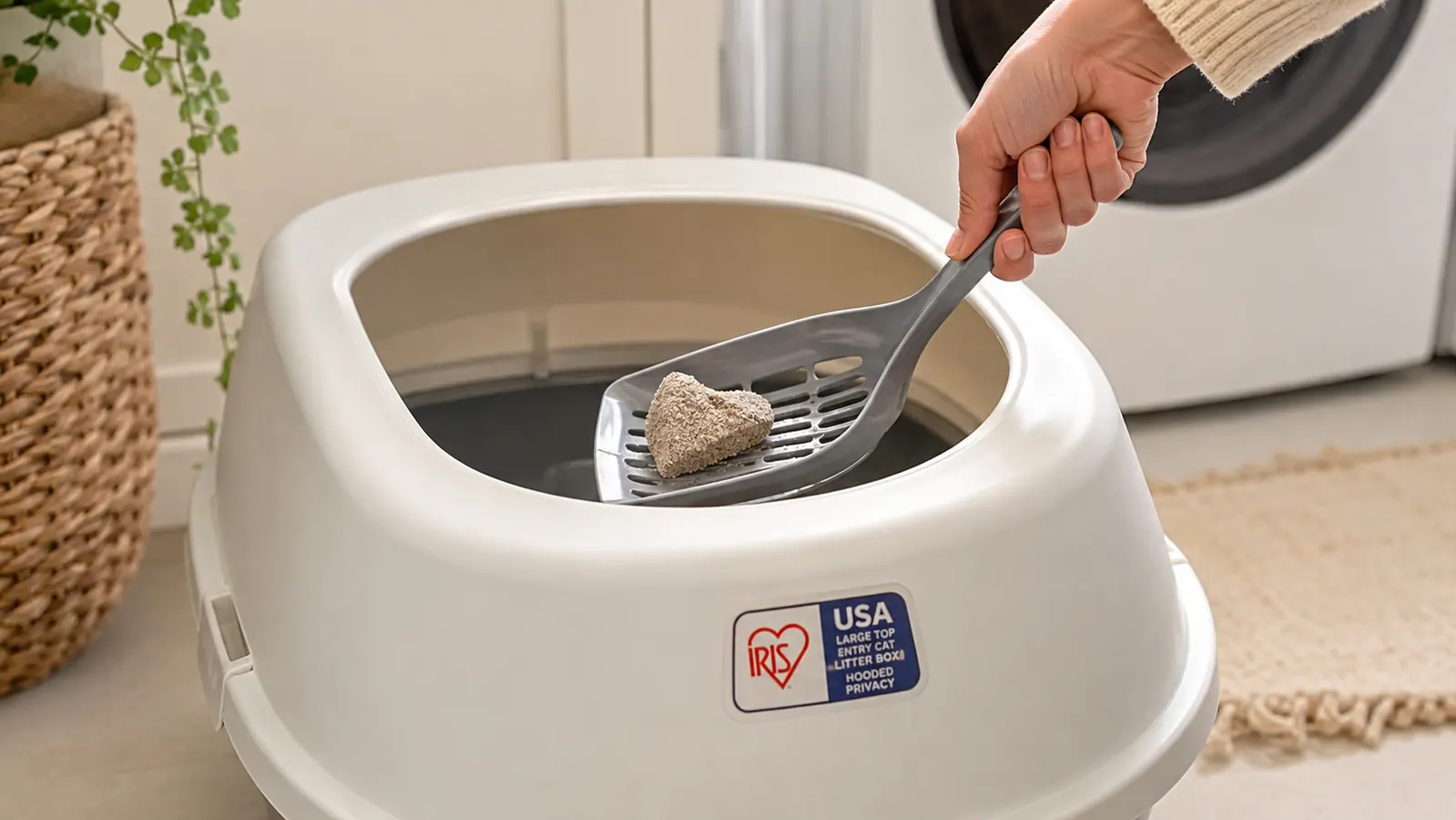
The honest caveat is the scooping. The opening is roughly a foot across, which is enough for the scoop, but you reach in and work blind. There is no front door and no way to see the far corners without lifting the whole lid. I have learned to run the scoop along the bottom edge and the walls by feel. It takes me about two minutes a day, which is fine. For a bigger person, or anyone with a sore shoulder or wrist, reaching into that hole and fishing out clumps every day would be a real nuisance. That is the part the product photos do not show you.
A year of daily scooping, and the only thing I still grip about is that I cannot see the far corners without lifting the whole lid. Everything else, the smell, the tracking, the dog, it all just stopped.
What The Top Entry Design Actually Fixes
The reason this box works is simple geometry. The only way in and out is the top, so the cat does its business, jumps straight up, and lands back on the lid before touching the floor. Any litter stuck to its paws falls in that moment, back into the box, not across your kitchen. In a year I have swept maybe a dozen stray granules out of the laundry room, where it used to be a handful daily. That alone was worth the switch in my house.
The sealed lid is doing the odor work. With a front entry box, urine that lands against the bottom edge wicks into the plastic seam and the smell works its way out no matter how often you scoop. The IRIS box has no front gap, so the odor stays under the lid until you open it. I can walk past the laundry room door and not smell anything, which I honestly could not say about the covered front-entry box I had before. For a box in a main floor room, that sealed-up design is the big win.
And it puts the box out of the dog's reach. The lid sits about fifteen inches off the floor and is not easy to knock aside, so Gus the mutt cannot get his nose in. I still close the laundry room door at night out of habit, but I have not needed to. If you have a dog that raids the cat box, this is the single best reason to go top entry.
The Downsides Nobody Mentions
First, the scooping blind spot I already covered. It is the thing you live with every single day, so it outweighs every one-time complaint. Combine it with a heavy or older cat and it becomes a real problem, because the daily effort sits on top of the daily worry.
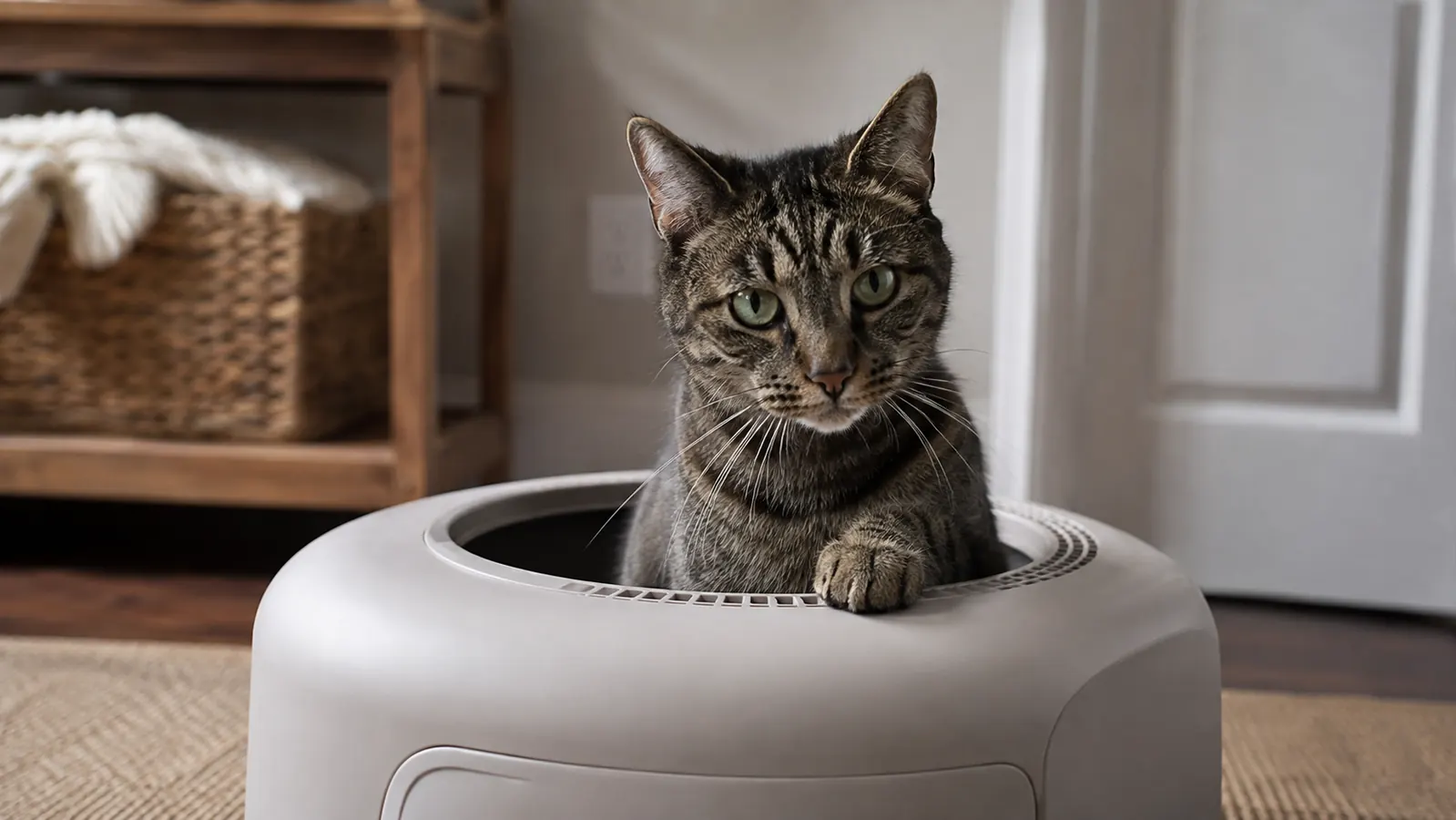
Second, not every cat will use it. A kitten, a senior, or any cat with arthritis or a weight problem may not want to jump up and down through a hole every time it needs to go. Mabel and Pip are both light and spry, so it works here. If your cat is twelve pounds or more, or has any mobility trouble, I would size that risk carefully. One of the honest reviews I read before buying described a cat that simply refused and went on the floor instead. That is the risk you take with a design that asks more of the cat.
Third, it is not a self-cleaning box and it never pretends to be. You still scoop every day, and you still deep clean once a week. The top entry design hides the smell and the mess, but it does not clean itself. If the reason you are looking at this box is that you want to think about litter less, this is not that. It just hides the mess better than a pan does.
Build Quality And Cleaning Over A Year
After twelve months of daily scooping and weekly hose rinses, the plastic is in good shape. No cracks, no warping, no yellowing from the sun or the litter. The lid still snaps down firmly and the rim still seals. I expected the hinge area to wear out and it has not. That is the IRIS reputation in one sentence: plain, thick plastic that holds up to being carried outside and hosed down every week.
Deep cleaning is genuinely easy because there are no corners to scrub. The basin is smooth and rounded, so a rinse and a wipe gets every bit of old litter out. I have left it out in the sun for a few hours and it comes back looking new. For anyone who has fought a front entry box with a little flap door that falls off every time you wash it, this is a relief. There is almost nothing to break, because there are almost no moving parts.
One small nit: the box is on the large side and when it is full of litter it is heavy to carry outside for the weekly clean. I can manage it, but it is a two hand job. If you have trouble lifting, or a laundry room with no outside access, factor that into the routine before you commit.
How It Compares To The Covered Front-Entry Box I Had Before
Before this box I used a standard covered litter box with a little flip door on the front, the kind you see in every pet aisle. It kept the smell down reasonably well, but it was a constant battle for two reasons. The flip door fell off every single time I washed it, and litter got tracked out through that front door onto the floor, then carried across the kitchen, then across the whole house, because a cat that walks through litter walks through everywhere. The covered front entry box slowed the mess down but never stopped it.
The top entry box stops the tracking at the source instead of managing it after the fact. The cat cannot walk out of this box on its feet, because the only exit is straight up. It lands on the lid, any stray pellet falls there, and that is the end of it. For my money, that single difference is why the top entry design beats a covered front entry box when your cats are light enough for it. The flip door on the old box was the weakest part, and this box has no flip door and no weak part to knock off.
The tradeoff is convenience. A front entry box is easier to scoop because you can open the top wide and see everything. A top entry box hides the mess so well that you literally cannot see the far corner until you lift the lid. If you clean boxes all day for a living, or if cleanup is already something you dread, that invisible far corner is a real annoyance. Pick your priority: I chose less litter on the floor and less smell, and I am glad I did, but it is a genuine either or and not a free lunch.
Litter Choice Makes A Bigger Difference Than The Box
Here is what ten months taught me that no box review mentions: the litter you pour in matters as much as the box you pour it into. I started with a light, unscented clay and it clumped poorly, and the top entry opening made weak clumps worse, because I was lifting them out blind and they fell apart in the scoop. I switched to a firmer clumping clay, one that sets up hard and dry, and suddenly the daily scoop was a five minute painless job instead of a farming chore.
I also learned that scented litters are the wrong move in a sealed box. The top entry design holds odor so well that you do not need a perfume, and the perfume plus a sealed lid can build up into a smell you cannot get rid of until the litter change. Plain, unscented, hard clumping litter is the goal. The box does the odor work; the litter just needs to clump and stay put.
And the depth matters more here than in a pan. A top entry box needs enough litter for the cat to bury properly, because it is doing its business in a cramped, dark space with walls right around it. Three inches worked for my two. If your cat kicks before it goes, that is normal, but it means you may need a little more depth so the urine hits litter and not the smooth basin. That is a ten minute experiment with your own cat, not a rule, but it is the kind of thing you only discover by living with one of these boxes.
What I'd Tell You Before You Hand Over Your Money
If your cat is light, healthy, and jumps fine, this box will likely fix the two messes driving you crazy, and it does it for a price that feels fair. I have recommended it to two neighbors with the same two complaints and both are still using theirs months later. If your cat is anything other than light and healthy, or if your own back and shoulders are not what they used to be, spend the same money on a front entry box you can see into instead. The design that solves your problem and the design that suits your cat may not be the same design.
Set it up somewhere quiet and give the cat a week. Do not expect the first jump to go smoothly, some cats stare at the opening for a day before they trust it. Leave a little used litter on top of the lid for the first day so they recognize the smell and understand where it goes. That one trick, a familiar smell, is what convinced Pip to stop circling and just jump in. Mabel needed no convincing at all, she treated the lid like a new lookout spot.
Steal this cleaning schedule if nothing else: scoop once a day with a firm clumping litter, deep clean once a week out in the sun, and do not let any scented litter get anywhere near a sealed box. Do those three things and I am confident you get the same year of no smell and no litter trail that I got. And when the time comes, take the extra minute, lift the lid, and look at the corners before you walk away. It is the only honest habit I have not quite trained into myself yet.
The litter you pour in matters as much as the box. Firm clumping clay, three inches deep, unscented, and the top entry design does the odor work. Get those two in sync and you stop fighting the box entirely.
What I Liked
- Dramatically reduces litter tracking, stops the trail around the box
- Sealed lid holds odor well even between scoops
- Keeps dogs and small children out of the box
- Simple, sturdy plastic with real underlying build quality
- Easy to deep clean, no flap door or corners to fight
- Affordable for the size, no electric parts to break
Where It Falls Short
- Daily scooping is done blind through the top opening
- Older, heavy, or arthritic cats may refuse to use it
- Full box is heavy to carry outside for weekly cleaning
- Not self-cleaning, you still scoop every day
Who This Is For
This box is for the household with a young or mid-age cat of normal weight, a dog that likes the litter box, or a floor that never looks clean no matter how often you sweep. If your main frustrations are odor in the room and a gritty trail of clay across the floor, and your cat can comfortably jump in and out, the top entry design fixes both problems for a very fair price. It is a practical, low-tech answer that keeps working long after a gadget would have broken. I have had mine a year and I would not go back to a front entry box.
Who Should Skip It
Skip it if your cat is a senior, overweight, or has any hip, knee, or mobility trouble. The whole design asks the cat to jump up and down through a hole, and that is a real physical ask for the wrong cat. Skip it if you have a bad back, shoulder, or wrist, because the daily blind scooping and the heavy weekly carry will wear on you. And skip it if the reason you are shopping is to avoid scooping altogether. This box hides the work, it does not remove it. For those situations a front entry box, or a genuinely self-cleaning model, is the better fit even if it tracks a little more litter.
Sick of the litter trail and the dog snacking?
If your cat is light, healthy, and jumps fine, this box ends the two messes that actually drive people crazy. Twelve months in, it is still the best plain box I have used. Check the current price on Amazon and decide if it fits your cat.
Amazon Check Today's Price on Amazon →