
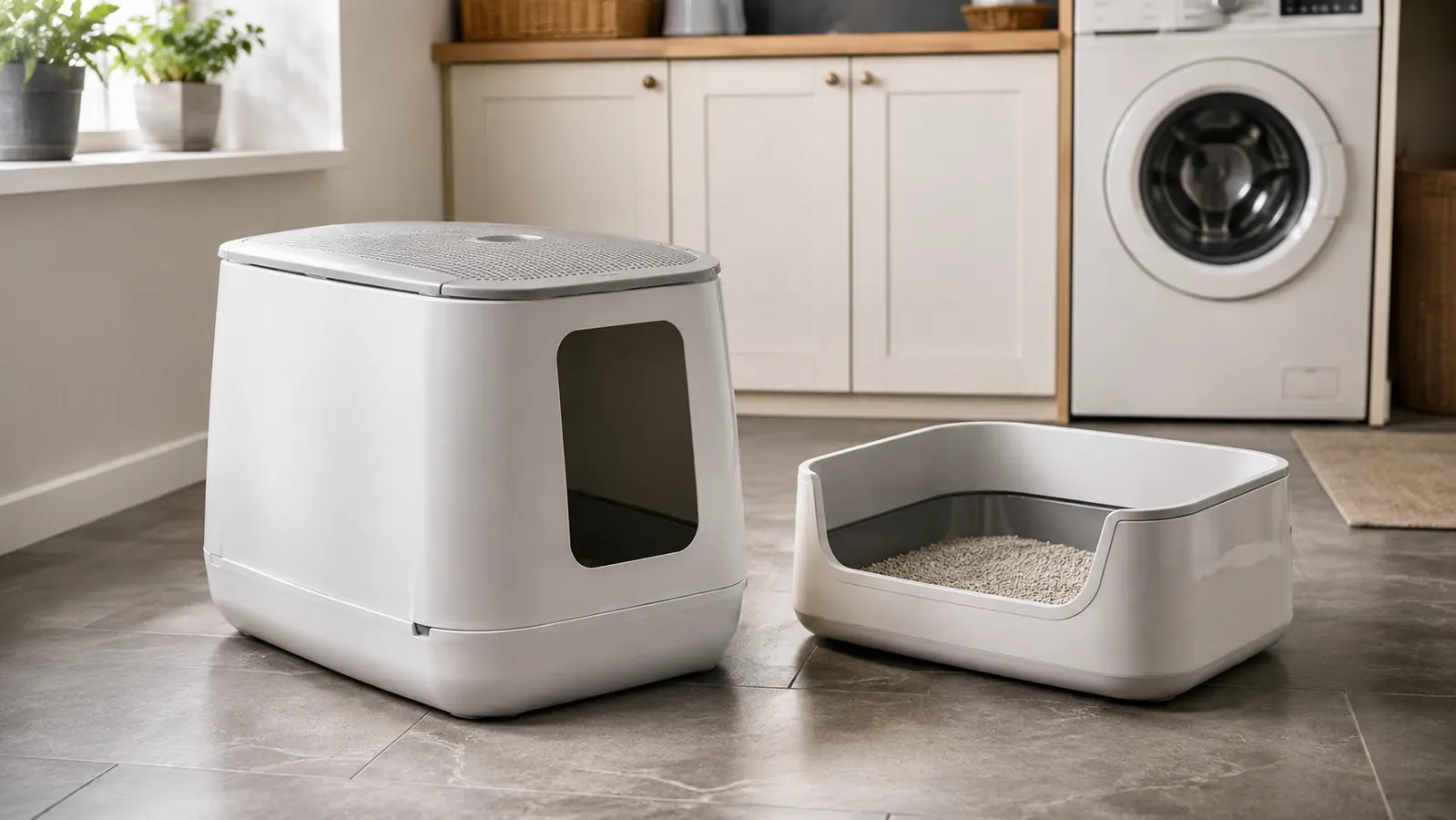
I have kept cats for about thirty years, and for most of that time the litter box was the same plain open pan my mother used: low sides, front opening, no lid. It worked, and it was easy to scoop. It also scattered litter across a two foot radius, let every smell out into the room, and gave our beagle the easiest snack access on the street. Two years ago I switched the main box to an enclosed top entry box, the IRIS USA large model with a flat lid, and kept one open front entry pan for the kitten. This is what that comparison taught me.
The box that stopped the litter trail in a three cat house
If you are tired of sweeping pellet after pellet off the bathroom floor, the IRIS USA top entry box is the single change that made the biggest difference in my house. Check the current price on Amazon before you decide.
Amazon Check Today's Price on Amazon →| Top Entry | Front Entry Cat Litter Box | |
|---|---|---|
| The match-up | IRIS USA Top Entry | Open Front Entry Pan |
| How the cat gets in | Through a hole in the flat top lid | Through an open front or the top rim |
| Litter tracking | Nearly zero; the lid scrapes paws | Significant, spreads in all directions |
| Odor control | Sealed lid traps smell inside | Open top, odor drifts out |
| Dog-proofing | Dog cannot reach the waste | Open, easy for a dog to reach |
| Ease of cleaning | More steps; lid and insert to wipe | One piece, faster to rinse |
| Best for | Multi cat homes, dogs, problem trackers | Kittens, seniors, cats that will not jump |
How I Tested These Two Boxes
Before I tell you which box won, let me be clear about how I ran this comparison, because a lot of reviews on these pick one and never look back. For eight months I kept the IRIS top entry box as the main litter station in our laundry room and the open front entry pan in the back hall, with three cats using both freely. I scooped each every morning, did a full wash of each on a rotating schedule, and I kept rough notes on three things: how many pellets I swept up per week around each box, how soon after a visit the room smelled, and which cat used which box and how often.
Our household is a good test bed because the cats do not all behave the same. There is a ten year old tabby who digs like she is mining for treasure and kicks litter halfway across the room. There is a sixteen year old girl who is stiff in the hips and prefers to step straight in. And there is the kitten, now about a year old, who will use whatever is closest. Add the beagle, who saw the open pan as a buffet, and I had every reason to watch the mess closely.
Where The IRIS Top Entry Box Wins
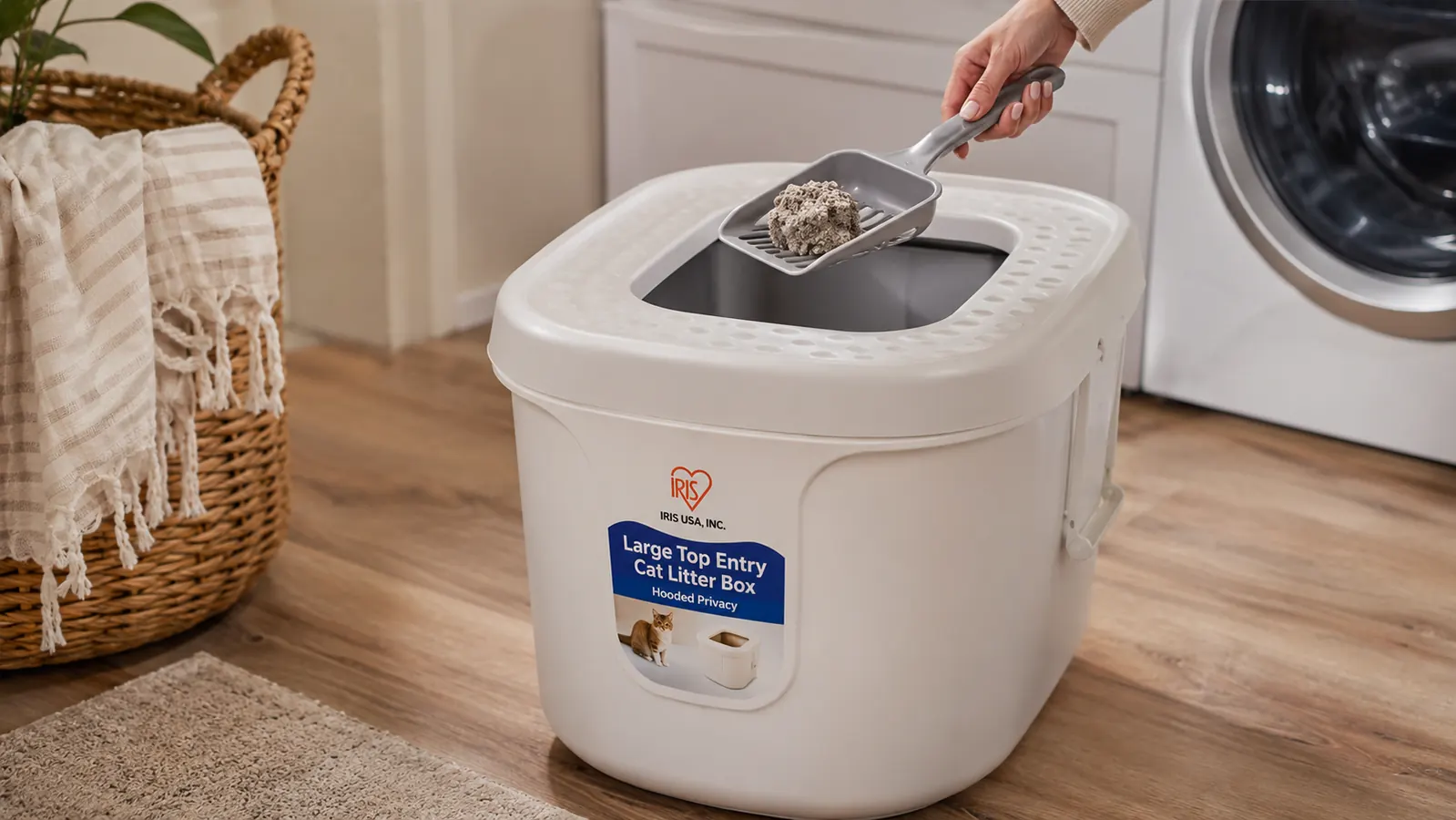
The tracking difference is the reason I stuck with it. A cat hops out of a top entry box through a small opening, and the edge of that lid scrapes the litter off its paws as it climbs. Before I switched, I was sweeping the laundry room twice a day and still finding pellets in the hallway. With the top entry box, the floor stays mostly clean for a full week. It is the closest thing to a litter mat that works without being a second thing to clean.
It also stops the smell and stops the dog. The box is tall, with a solid lid, so the odor does not waft out the moment the cat finishes. Even in a small laundry room, with three cats sharing the main box, I could walk past an hour after a visit and smell almost nothing. And our beagle, who used to treat the open pan as an all you can eat buffet, cannot get his head through the top hole. That alone was worth the switch, because the vet bills for a dog that raids a litter box are not fun.
The large IRIS model has real room inside despite the sealed look, which matters for a bigger cat that turns around before burying. The flat lid doubles as a surface, and the box is tall enough that a cat does not feel trapped the way they can in a low covered box. None of my three ever hesitated to use it, which was my biggest fear going in.
Where The Open Front Entry Pan Wins
I am not going to pretend the top entry box is better at everything, because it is not. The plain open pan is simpler to clean. It is one piece of plastic, you tip it, you rinse it, you are done. The IRIS box has more parts, a lid, an insert, and a couple of corners that collect litter, so a full clean takes me a few extra minutes. On a busy week when I just want to get it over with, that matters.
An open pan also suits the two cats who will not jump. Our older girl, sixteen now, stopped using the top entry box after about a month because climbing in and out got hard for her. The kitten used it fine, but she does not cope with it anymore. For her, the low open pan is the difference between a clean box and a protest on the rug. If you have a senior or a cat with bad hips, the ease of stepping straight in is more important than any tracking advantage.
The most specific proof I have is the floor: I went from sweeping the laundry room twice a day to once a week after the top entry box went in. That is the whole argument right there.
Odor Control In A Multi Cat House
Odor is where a covered box earns its keep, but only if you are honest about how it works. A sealed box does not make the waste disappear, it holds the smell inside until you open the lid to scoop. That trade is worth it in a busy household, because the smell does not hit the whole house the moment a cat finishes. With the open pan, one visit from our digging tabby and you knew it the second you walked in the door.
The catch is that a covered box punishes a lazy cleaning habit more than an open one does. If you let it go for three days, the smell that comes out when you lift the lid will stop you in your tracks. So I stick to a daily scoop, and on overcast humid weeks I lift the lid and wipe the inside with a mild cleaner. With that habit, the IRIS top entry box kept the laundry room genuinely neutral, which no open pan ever did in my house.
Litter Tracking And The Dog Who Eats Cat Litter
The tracking comparison is not close. An open front pan has nothing between the cat's paws and the floor, so the cat walks out carrying litter as it goes. The top entry box scrapes the paws on the way out of the opening, which is the whole trick. In my notes, the open pan sprinkled pellets in every direction, out the front and over the low back edge, while the top entry box left almost nothing beyond a few stray pieces on the mat.
The dog angle is the part nobody mentions in the glossy reviews. If you share a house with a dog, especially a breed with a nose for cat waste, the open pan is a constant risk. Our beagle has been to the vet twice in his life for eating things he should not, and both times it tracked back to the open box. Since the IRIS box went in as the main station, he has not gotten into it once. For a dog household, that is the strongest reason to go top entry.
Which Cats Accept Which
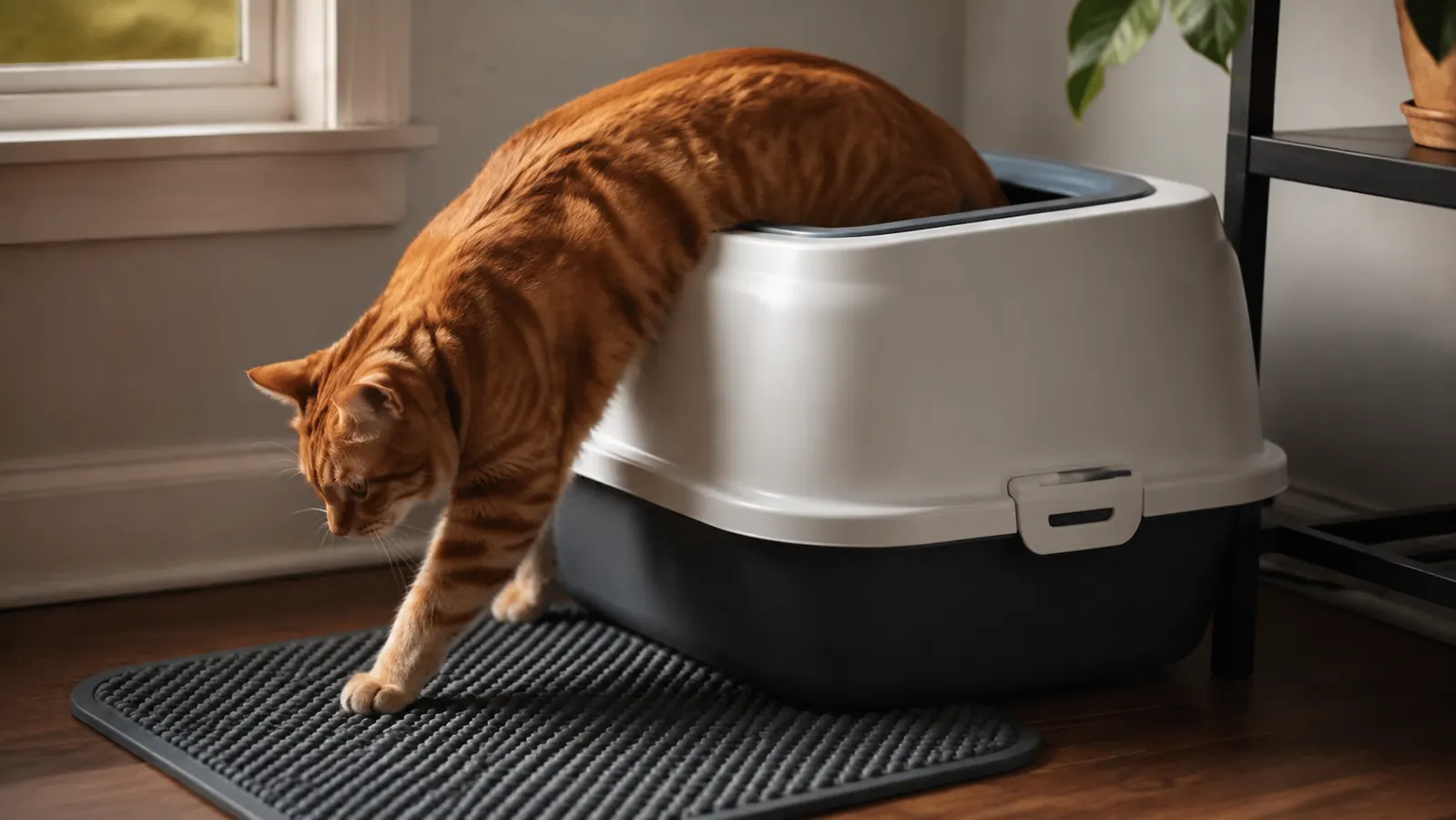
Here is the part that does not show up in a comparison table: cats have opinions, and an older cat will not always go along with your plan. All three of mine used the IRIS top entry box within the first week, which surprised me, because I had read stories of cats refusing to jump. But the ten year old and the kitten took to it right away, and the sixteen year old used it for a month before her hips started complaining.
That is the honest limit of a top entry box. Any cat that cannot or will not climb, whether from age, bad joints, or just a stubborn streak, is going to resent the climb and look for somewhere else to go. So the practical answer for most households is not one box, it is both. Run the top entry box where the litter trail bothers you most, and keep one low open pan somewhere discreet for the senior or the kitten. That is exactly what I do, and it is why none of my cats have gone on strike.
Size, Placement And The Cleaning Tradeoff
Space is another place the two boxes differ. A top entry box is tall and takes up a smaller footprint on the floor, so it tucks into a corner and keeps the smell and the litter in one contained spot. The open pan is wide and low and needs clear floor around it because the cat scatters as it exits. In our narrow laundry room, the tall IRIS box fits the corner that the open pan never could, which is a quiet selling point if you are tight on space.
What It Costs Over Time
The upfront price is not the whole story, because the real cost of a litter box is the litter you pour into it and the time you spend cleaning it. I found the top entry box uses about the same amount of litter as the open pan, no more and no less, since it is not any deeper than a standard box. What it saves you is time, the daily sweeping and the hostile marvelling at how far a pellet can travel. That is where the value sits for me.
Who Should Buy Which
Buy the top entry box if you have more than one cat, if you share a house with a dog that likes the litter box, if you are tight on floor space, or if you are sick of sweeping pellets all over the floor. That is the box that made the biggest difference in my household, and I would buy the IRIS model again without a second thought. Choose the open front entry pan if your cat is a senior, a kitten, or a cat that will not climb, or if you want the lowest maintenance box in existence and you are willing to live with some tracking.
The Honest Tradeoffs Nobody Puts In The Ad
Let me leave you with the two things I would want to know if I were reading this before buying. First, a top entry box asks a little more of you on deep cleaning days, because there are more corners and a lid to wipe. It is still a ten minute job, just not a five minute one. Second, you genuinely need one cat that will climb, and if every cat in the house is elderly or stubborn, the clever box will sit unused. Work those two facts into your decision and you will not be disappointed either way.
Start with the top entry box and keep one open pan for the senior
My honest advice is to run both, a top entry box as the main litter station and one low open pan if you have an older or smaller cat. The IRIS top entry box is the one to start with. Check the current price on Amazon and see if it fits your corner.
Amazon Check Today's Price on Amazon →